Walter Pall o tmelení rán na stromoch
Walter Pall napísal tento príspevok ako reakciu v diskusii na Bonsai Nut. Tento príspevok v origináli možete nájsť aj na jeho blogu http://walter-pall-bonsai.blogspot.com/2009/01/about-sealing-wounds-on-trees.html
Rovnako ako Will Heath v článku, ktorého preklad som uverejnil nižšie, sa aj Walter odvoláva na výskumy doktora Shiga. Pár krát som sa stretol s tým, že Walter odporúča ako pomoc pre ranu spievanie Internacionály, alebo sa za ranu vraj môžte pomodliť Ruženec - vraj to pomáha rovnako dobre ako Cut Pasta. Tak a teraz si len vybrať - podľa toho či ste katolík alebo komunista (výhodu majú veriaci komunisti).
Tu je samotný článok:
Človek by si pomyslel, že otázka ošetrovania rán je niečo, čo je možné jednoducho zodpovedať tým, že budeme počúvať čo o tom hovoria profesionáli, ktorý sa rezaním stromov živia a vedci, ktorý robia výskum na základe ktorého sa riadia ľudia starajúci sa o stromy. Ako je možné zistiť, nie je to také jednoduché. Na túto tému prebiehajú zápasy v kluboch. Na stránkach miestnych novín na túto tému prebiehajú zápasy, keď sa orezávajú stromy v parkoch. Medzi bonsaistami je to niečo ako náboženská vojna. Ako je teda možné, že niečo čo by nemalo vytvárať žiadne pochybnosti z dôvodu zjavnej jednoduchosti, spôsobuje také rozhorčenie?
Podľa toho ako to vidím ja, tak hlavným dôvodom na to je, že ľudia nemajú takmer žiadnu šajnu o tom ako funguje rastlina, ale majú všeobecné vedomosti o tom ako funguje ľudské telo. Ľudia vedia, že ak má človek veľkú ranu a tá je neošetrovaná, tak to neprospieva zdraviu. Ľudia vedia, že u cicavcov sa musí zabrániť hnilobe z vnútra rany. Ak ma chirurg nenávidí tak veľmi, že mi rozreže skalpelom brucho a nechá ho otvorené bez ošetrenia rany, bude to všetko možné len nie zdravé. Ak mu ja poviem, že akékoľvek ošetrenie rany bude zbytočné a rana by sa mala nechať tak ako je, tak ma nazve bláznom alebo ignorantom a bude mať pravdu. A rovnako je to aj u stromov – zem je plochá. Prípravky na ošetrovanie rán na stromoch sú založené na tomto veľkom nedorozumení. A potom prišiel Dr. Shigo a urobil revolúciu vo svete starostlivosti o stromy. Jeho výskum objavil niečo čo sa nazýva codit (Compartmentalization Of Decay In Trees) (pretože väčšina ľudí by nevedela hláskovať alebo vysloviť slovo compartmentalization ). V podstate hovorí o tom, že stromy nehnijú zvnútra ako nám to hovorí zdravý rozum. Stromy vytvárajú oddelenia s chemickými a fyzikálnymi bariérami. Tieto oddelenia začínajú v strede kmeňa a je ich niekoľko v letokruhoch smerom von k povrchu kmeňa. Zatiaľ čo oddelenie v strede podľahne hnilobe, v rovnakom čase hniloba len tak jednoducho nepostúpi do ďalšieho oddelenia. Eventuálne k tomu časom dôjde, ale strom na svojom obvode bude ďalej rásť a vytvárať nové oddelenia. Aj keď vnútorné oddelenia podľahnú hnilobe, tie vonkajšie budú stále pokračovať v raste. Tento proces je obvykle tak pomalý, že strom je týmto spôsobom schopný rásť preč smerom od hniloby po stovky až tisícky rokov. Takmer každý starý ihličnan v prírode podlieha hnilobe z vnútra. Ale vďaka tvorbe oddelení, kompartmentalizácii, neodumrie.
Doktor Shigo prišiel na to, že ľudia ktorý viac alebo menej profesionálne „pomáhajú“ stromom robia dve chyby:
Odrezávajú konáre plocho pri kmeni a tak vytvárajú veľkú otvorenú ranu cez niekoľko oddelení. Tým vzniká nebezpečenstvo, že ináč zdravé oddelenia budú jednoducho napadnuté rôznymi druhmi škodcov, hlavne hubami a eventuálne hnilobou.
Tmely na ošetrovanie takýchto rán, ktoré sa štandardne používajú sú aplikované so zámerom zabrániť hnilobe vnútorných častí stromov.
On prišiel na to, že práve opak je pravdou ak následok takéhoto postupu. V prírode nie je možné zabrániť tomu aby sa na čerstvú ranu dostali nejaký škodcovia ako huby alebo baktérie. Ak nejaký dobromyseľný krajinár myslí, že tomu vie zabrániť, tak jednoducho toho veľa nevie. Ak ranu uzavriete tak jednoducho vytvárate pre týchto škodcov ideálne prostredie na to aby si robili svoju prácu. Potrebujú teplo a vlhkosť čo získajú ľahšie s pomocou tmelu ako bez neho. Takže Dr. Shigo urobil revolúciu v ošetrovaní stromov tvrdiac, že tmely na rany sú zbytočné a môžu byť dokonca nebezpečné.
Dr. Shigo je považovaný pre svoje objavy za trvalý míľnik vo vede o starostlivosti o stromy. Študent záhradníctva alebo lesníctva, ktorý o ňom nikdy nepočul je ignorant. Človek, ktorý sedliackym rozumom chce bojovať proti výsledkom výskumov najlepších kapacít sveta trvajúcich desaťročia je hlúpy ignorant. Krajinár, ktorý hovorí, že nikdy nepočul o Dr. Shigovi a nevie vysloviť „kompartmetalizácia“ je buď veľmi jednoduchý človek alebo šarlatán.
Ale svet sa veľmi nezmenil. Všeobecne sa v starostlivosti o stromy nasledujú odporúčania Dr. Shiga, ale mnohý to stále nerobia. Nuž, mnoho ľudí tie odporúčania nenasledujú, pretože to trvá roky, kým sa ukáže výsledok a tak na ignorovaní odporúčaní Dr. Shiga sa dajú zarobiť peniaze. Ako to? Skúste odrezať pár veľkých konárov vo verejnom parku a neošetrite rany a uvidíte ľudí okolo seba skákať od zlosti. Oni budú „vedieť“, že niečo nerobíte správne. Ľudia vás požiadajú, aby ste sa postarali o stromy v ich záhradách a vy necháte veľké otvorené rany po konároch. Budú si myslieť, že neviete čo robíte. Takže existuje mnoho šarlatánov, čo na veľké rany používajú rôzne tmely a zarábajú na tom a zároveň tým ľuďom zatvoria ústa. Títo šarlatáni vedia, že by to vlastne robiť nemali, ale vedia, že je to dobré pre nich samotných a nie je to tak zlé pre stromy samotné, aspoň krátkodobo. A potom sú taký, ktorý sa ďalej nevzdelávali po svojom základnom štúdiu starostlivosti o stromy. Robia veci tak, ako boli zvyknutí ich robiť pred tridsiatimi rokmi. Problém je ten, že verejnosť radšej počúva šarlatánov ako vedcov.
Čo má všetko toto spoločné s bonsai?
Nuž, vytvárame na stromoch veľké otvorené rany na stromoch celý čas. Nemali by teda aj u nás platiť závery doktora Shiga? Môj názor je, že určite áno.
Toľko v k vede. Teraz k praxi. Ako to robím ja po desaťročiach štúdia?
Viem, že ohrozujem oddelenia ak robím rezy tak ako sa praktizujú u bonsai, to znamená blízko pri kmeni a navyše s konkávnymi kliešťami čo robí celú situáciu ešte horšou. Robím to aj ja stále takto, pretože to strom nezabije. Vytvorí to hnilobné oddelenia ale nezabije to strom. Strom môže byť z vnútra celý dutý a napriek tomu nemusí odumrieť. Veľké duté stromy vo voľnej prírode môžu byť ohrozené z dôvodu straty stability. V prípade bonsai toto nie je problém. Ak robím veľké rezy, dávam veľký pozor na to, aby rana NEMALA rovnomerný tvar, aby NEBOLA pravidelná, ako sa to pri bonsai odporúča. Bude tam kalus a v prípade veľkých rán tam stále bude diera. V prípade menších rán tam stále bude jazva. Ja chcem dosiahnuť to, aby diera alebo jazva vyzerali prirodzene, to znamená nikdy by nemali byť pravidelné, ako po odstrihnutí konkávnymi kliešťami.
Zámerne vytváram na okraji rany nepravidelné nerovnosti.
Čo sa týka použitia tmelov na rany je veľký rozdiel medzi ihličnanmi a listnáčmi. Ihličnany vo všeobecnosti nepodliehajú hnilobe tak ľahko, pretože majú najlepšiu prirodzenú ochranu, ktorou je živica. V prípade listnatých stromov k hnilobe dochádza oveľa ľahšie, ale ako ja poznám rany tak hnijú oveľa viac ak sú „chránené“. Na prekvapenie ľudí ja väčšinou chcem aby otvory na stromoch hnili. Chcem mať väčšinou na svojich stromoch veľké prirodzene vyzerajúce dutiny. Takže by som celkom spoľahlivo na to mohol používať tmel. Ale keďže viem, že tmel je nadbytočný, tak jednoducho nepožívam žiadny. Väčšinou.
Používam tmel na niektorých ranách, kde vidím nebezpečenstvo príliš rýchleho vysychania. To je prípad niektorých citlivých javorov, napríklad. Niekedy sa mi náhodou podarí nalomiť vetvičku a myslím si, že má šancu sa zachrániť. Preto v takých prípadoch dávam na ranu tmel aby som zabránil dehydratácii. Používam tmel, ktorý sám zmizne po niekoľkých mesiacoch, je lacný a je málo viditeľný: KRAVSKÝ DOJACI TUK. Veľmi blízko mám obchod s potrebami pre farmárov, kde tento produkt viem kúpiť veľmi lacno (Áno, je to ten tuk ktorý sa používa na ruky keď dojíte kravu). Je takmer neviditeľný, funguje ako Vazelína a vydrží na rane asi rok, kým úplne zmizne. A určite nie je jedovatý. A niekedy takto skrývam čerstvé rany tým, že na nich použijem kamufláž.
A čo vravím ľuďom, ktorý trvajú na tom, že každú ranu na bonsai je potrebné ošetriť tmelom? Nuž, pokračujte v tom, ak sa pre to cítite lepšie ale buďte si istý, že je to lepšie skôr pre vašu dušu ako pre strom. A neverte tomu, že ten kto vám hovorí, že používa tmel na každú ranu je lepší človek.
Amen.
Tuesday, October 20, 2009

Sealing wounds on trees - English
This I wrote on bonsainut in January 2009
It was in response to someone who said he was a professional gardener in America and had never heard of Shigo and who insisted that it was state of the art to seal all wounds.
One would think that the question of wound sealing is something that can easily be solved by listening to professionals who trim trees for a living and to scientists who do the research on which the horticultural practices are based. As one can see it is not that simple. There are fights about this in garden clubs. There are fights about this on the local side of newspapers when trees are trimmed in a park. In bonsai circles this is like a religious war. How is it possible that something which should leave no doubts because of obvious simplicity causes such aggravation?
The main reason in my eyes is that folks in general have no or almost no clue about functioning of a plant but they have a general clue how a human functions. They know that if a person has a large wound which is not treated it is not so healthy. They know that it must be avoided to rot from within if you are a mammal. If KK hates me so much that he cuts my belly open and leaves me without treatment it would be just but not healthy. If I told him that any would treatment would be detrimental and it should be left as it is he would call me nuts or an ignorant; and right so. And the same should be true with trees - the earth is flat. Wound sealants were and still are based on this huge misunderstanding. Then along came Dr. Shigo and he revolutionized the horticultural world. His research found something that is called codit (because most folks could never spell or pronounce the word compartmentalization). In a nutshell it says that trees do NOT rot from within as common sense tells as. They form compartments with chemical and physical boundaries. These compartments are started in the center of a trunk and there are several in rings to the outside. While the center compartment will rot at some time the rot will not continue into the next compartment easily. It will eventually, but on the outside the tree will grow and form new compartments. Even if all inner compartments rot there will still be an outer one where the living root will keep growing. This process normal is so slow that a tree will grow away from the rot successfully for many hundred years, even thousand years. Almost every very old conifer in nature rots from within. But due to compartmentalization the don't die.
Dr. Shigo found that humans who 'help' trees more or less professionally make two mistakes:
1) They cut branches off flat to the trunk and by doing so they make big open wounds across several compartments. Thus they create the danger that otherwise healthy compartments will be easily invaded by all sorts of critters, mainly fungi and to eventually rot.
2) Wound sealants as applied conventionally are meant to prevent rotting of the inner parts of the tree. He found that exactly the opposite is the consequence of this. First out in nature there is no way to prevent some sort of fungi or bacteria getting onto a fresh wound. If some innocent landscaper thinks he can prevent this he simply does not know enough. If you seal it you are creating an ideal environment for these critters to do their work. They need warmth and moisture which the get much better with a sealant than without one. So Dr. Shigo revolutionized horticulture by stating that wound sealants are superfluous and can even be dangerous.
Dr. Shigo is considered an eternal landmark in horticultural science for his findings. A student of horticulture who has never heard of him is an ignorant. A person who think he can fight decades of scientific study of the best capacities in the world with just common sense is a silly ignorant. A landscaper who pretends to not have heard of Dr. Shigo and cannot pronounce compartmentalization is at best a very simple person or a charlatan.
But the world has not changed too much. It is accepted mainstream horticultural practice by now to follow Dr. Shigo, but many don't. Well, fact is that one gets away with it because it takes years before the results show and then one can make money with ignoring Dr. Shigo. How that? Well, cut off big branches in a public park an do not treat them with something and you will see that people jump all over you. They 'know' they you are doing something wrong. Folks ask you to treat their trees in the garden and you live big open wounds. They will think you don't know what you are doing. So there are many charlatans who do put wound sealants onto big wounds to make money and to make people shut up. These charlatans know that they should not really doing this, but it is good for them and not all that bad for trees; a least not immediately. And then there are some who have not bothered to continue learning after basic horticultural education. They are doing things the way we used to do them thirty years ago. The problem is that the public would rather listen to them than to science.
What has this all to do with bonsai?
Well we do create big wound on trees all the time. Should not all the findings of Dr. Shigo apply.? My take is that they certainly do.
So far to science. Now to practice. What do I personally do after decades of study?
I know that I am endangering compartments if I do cuts as they are the norm in bonsai; which means close to the trunk and even with a concave cutter which is even worse as Bill V. has pointed out. I choose to still do this because it will not kill the tree. It will create rotting compartments but it will NOT KILL the tree. Trees can be all hollow and still be very much alive. Large trees in nature can be endangered because the loose stability. With bonsai this is not an issue. When I do big cuts I usually make sure that the wound is NOT regular like it is recommended in bonsai. There will be callus and with very big wounds there will always be hole. With smaller wounds there will always be a scar. I want to make sure that the hollow or the scar look natural, meaning never round like done with a knob cutter. I make crude indentations on the edges of a would on purpose.
As far as sealant goes there is a huge difference between conifers and non-conifers. Conifers in general will not rot easily because they have the best protestant already, which is raisin. Deciduous trees will rot much easier, but I know holes will rot even more when 'protected' Well, much to the surprise of many I generally want my hole to rot. I want big natural looking hollows in my bonsai normally. So I could well use sealant to make the holes rot. But since I know that sealant is superfluous I just don't use any. IN GENERAL.
I do use sealant on some cuts where I see the danger of drying out quickly. This is on some tender maples sometimes. Sometimes I brake branchlets accidentally and think that they still have a chance to heal. Then I put some sealant to the wound to prevent dehydration. I use sealant that will disappear by itself after a few months and that is inexpensive and not very visible: COW MILKING FAT. I have a farm supply store very near by where I get this fat for almost nothing. (Yes, it is fat that you put on your hands when you stroke the tits of the cow). It is almost invisible, works like Vaseline and stays on for about a year before it disappears. and is certainly not poisonous.
And I do hide obviously fresh wounds sometimes by putting some camouflage onto them.
What do I tell people who insist in still sealing every wound on a bonsai? Well, go ahead if it makes you feel good but be aware that it is more for YOUR soul than for the tree. And do not believe that the one who is telling you that he does use sealants is the better person.
Amen.
It was in response to someone who said he was a professional gardener in America and had never heard of Shigo and who insisted that it was state of the art to seal all wounds.
One would think that the question of wound sealing is something that can easily be solved by listening to professionals who trim trees for a living and to scientists who do the research on which the horticultural practices are based. As one can see it is not that simple. There are fights about this in garden clubs. There are fights about this on the local side of newspapers when trees are trimmed in a park. In bonsai circles this is like a religious war. How is it possible that something which should leave no doubts because of obvious simplicity causes such aggravation?
The main reason in my eyes is that folks in general have no or almost no clue about functioning of a plant but they have a general clue how a human functions. They know that if a person has a large wound which is not treated it is not so healthy. They know that it must be avoided to rot from within if you are a mammal. If KK hates me so much that he cuts my belly open and leaves me without treatment it would be just but not healthy. If I told him that any would treatment would be detrimental and it should be left as it is he would call me nuts or an ignorant; and right so. And the same should be true with trees - the earth is flat. Wound sealants were and still are based on this huge misunderstanding. Then along came Dr. Shigo and he revolutionized the horticultural world. His research found something that is called codit (because most folks could never spell or pronounce the word compartmentalization). In a nutshell it says that trees do NOT rot from within as common sense tells as. They form compartments with chemical and physical boundaries. These compartments are started in the center of a trunk and there are several in rings to the outside. While the center compartment will rot at some time the rot will not continue into the next compartment easily. It will eventually, but on the outside the tree will grow and form new compartments. Even if all inner compartments rot there will still be an outer one where the living root will keep growing. This process normal is so slow that a tree will grow away from the rot successfully for many hundred years, even thousand years. Almost every very old conifer in nature rots from within. But due to compartmentalization the don't die.
Dr. Shigo found that humans who 'help' trees more or less professionally make two mistakes:
1) They cut branches off flat to the trunk and by doing so they make big open wounds across several compartments. Thus they create the danger that otherwise healthy compartments will be easily invaded by all sorts of critters, mainly fungi and to eventually rot.
2) Wound sealants as applied conventionally are meant to prevent rotting of the inner parts of the tree. He found that exactly the opposite is the consequence of this. First out in nature there is no way to prevent some sort of fungi or bacteria getting onto a fresh wound. If some innocent landscaper thinks he can prevent this he simply does not know enough. If you seal it you are creating an ideal environment for these critters to do their work. They need warmth and moisture which the get much better with a sealant than without one. So Dr. Shigo revolutionized horticulture by stating that wound sealants are superfluous and can even be dangerous.
Dr. Shigo is considered an eternal landmark in horticultural science for his findings. A student of horticulture who has never heard of him is an ignorant. A person who think he can fight decades of scientific study of the best capacities in the world with just common sense is a silly ignorant. A landscaper who pretends to not have heard of Dr. Shigo and cannot pronounce compartmentalization is at best a very simple person or a charlatan.
But the world has not changed too much. It is accepted mainstream horticultural practice by now to follow Dr. Shigo, but many don't. Well, fact is that one gets away with it because it takes years before the results show and then one can make money with ignoring Dr. Shigo. How that? Well, cut off big branches in a public park an do not treat them with something and you will see that people jump all over you. They 'know' they you are doing something wrong. Folks ask you to treat their trees in the garden and you live big open wounds. They will think you don't know what you are doing. So there are many charlatans who do put wound sealants onto big wounds to make money and to make people shut up. These charlatans know that they should not really doing this, but it is good for them and not all that bad for trees; a least not immediately. And then there are some who have not bothered to continue learning after basic horticultural education. They are doing things the way we used to do them thirty years ago. The problem is that the public would rather listen to them than to science.
What has this all to do with bonsai?
Well we do create big wound on trees all the time. Should not all the findings of Dr. Shigo apply.? My take is that they certainly do.
So far to science. Now to practice. What do I personally do after decades of study?
I know that I am endangering compartments if I do cuts as they are the norm in bonsai; which means close to the trunk and even with a concave cutter which is even worse as Bill V. has pointed out. I choose to still do this because it will not kill the tree. It will create rotting compartments but it will NOT KILL the tree. Trees can be all hollow and still be very much alive. Large trees in nature can be endangered because the loose stability. With bonsai this is not an issue. When I do big cuts I usually make sure that the wound is NOT regular like it is recommended in bonsai. There will be callus and with very big wounds there will always be hole. With smaller wounds there will always be a scar. I want to make sure that the hollow or the scar look natural, meaning never round like done with a knob cutter. I make crude indentations on the edges of a would on purpose.
As far as sealant goes there is a huge difference between conifers and non-conifers. Conifers in general will not rot easily because they have the best protestant already, which is raisin. Deciduous trees will rot much easier, but I know holes will rot even more when 'protected' Well, much to the surprise of many I generally want my hole to rot. I want big natural looking hollows in my bonsai normally. So I could well use sealant to make the holes rot. But since I know that sealant is superfluous I just don't use any. IN GENERAL.
I do use sealant on some cuts where I see the danger of drying out quickly. This is on some tender maples sometimes. Sometimes I brake branchlets accidentally and think that they still have a chance to heal. Then I put some sealant to the wound to prevent dehydration. I use sealant that will disappear by itself after a few months and that is inexpensive and not very visible: COW MILKING FAT. I have a farm supply store very near by where I get this fat for almost nothing. (Yes, it is fat that you put on your hands when you stroke the tits of the cow). It is almost invisible, works like Vaseline and stays on for about a year before it disappears. and is certainly not poisonous.
And I do hide obviously fresh wounds sometimes by putting some camouflage onto them.
What do I tell people who insist in still sealing every wound on a bonsai? Well, go ahead if it makes you feel good but be aware that it is more for YOUR soul than for the tree. And do not believe that the one who is telling you that he does use sealants is the better person.
Amen.
Odpadky na večeru - Slovak
Tak teda tu je samotný článok:
Odpadky na večeru.
"Nechodím často na fóra o varení a naozaj neviem čo sa tam deje. Stáva sa často aby sa nejaký kuchársky vedátor prezentoval takto? „Práve som sa prehrabával v obecnej skládke odpadu a nazhromaždil som veľa vecí, ktoré by možno mohli dať dokopy dobré jedlo. Na dnes som pozval na večeru svojho šéfa s manželkou a preto teba, Učenec Varenia, žiadam o tvoju najlepšiu radu, ako by som mohol urobiť dobrú večeru z toho čo mám k dispozícii.“ Veľmi rád by som si prečítal odpoveď! Cynické? Nuž, toto sa deje každý deň pri bonsai. Z nejakého dôvodu si celkom dosť ľudí myslí, že umenie bonsai pozostáva z vyrábania majstrovského diela z odpadkov. Realita je ale takáto: umenie bonsai pozostáva z učenia sa ako posúdiť a vybrať najlepší možný materiál, a to v prvom rade. Niekedy sa môže stať, že takýto materiál je z odpadkového koša, ale v tom prípade je to stále výborný materiál, ktorý majster rozozná a povie Vám to veľmi rýchlo. Ak začiatočník skúša svoje šťastie s odpadom, tak neodvratne pohorí. Prečo je to tak, že sa ľudia snažia ušetriť 20USD pri kúpe slušného materiálu a potom strávia hodiny a hodiny času pri práci na žalostnom materiáli? Ak má niekto slušnú prácu, tak by malo byť možné aby dostával od 10 do 50 USD, a niekdy aj oveľa viac za hodinu práce. Ako dlho človek pracuje na jednotlivom strome počas rokov? 10 hodín? 100 hodín. Nuž teda tu je moja jednoduchá rovnica: vezmite si počet hodín, koľko si myslíte, že budete pracovať na strome v budúcnosti a vynásobte to svojím hodinovým zárobkom. Výsledok je zmysluplná suma, ktorú sa Vám oplatí minúť pri zaobstarávaní si materiálu na to, aby ste trávili svoj čas rozumným spôsobom. Ja míňam najviac času, námahy a peňazí na to, aby som dostal do rúk správny materiál. Iba ten najlepší je dosť dobrý. A potom sa ma ľudia pýtajú, čo majú robiť s tým čo zachránili z odpadkového koša – a navyše chcú aj zdvorilú odpoveď! Tak toto ide u mňa za hranice politickej korektnosti. Niekto by im to mal povedať. Ja!"
Odpadky na večeru.
"Nechodím často na fóra o varení a naozaj neviem čo sa tam deje. Stáva sa často aby sa nejaký kuchársky vedátor prezentoval takto? „Práve som sa prehrabával v obecnej skládke odpadu a nazhromaždil som veľa vecí, ktoré by možno mohli dať dokopy dobré jedlo. Na dnes som pozval na večeru svojho šéfa s manželkou a preto teba, Učenec Varenia, žiadam o tvoju najlepšiu radu, ako by som mohol urobiť dobrú večeru z toho čo mám k dispozícii.“ Veľmi rád by som si prečítal odpoveď! Cynické? Nuž, toto sa deje každý deň pri bonsai. Z nejakého dôvodu si celkom dosť ľudí myslí, že umenie bonsai pozostáva z vyrábania majstrovského diela z odpadkov. Realita je ale takáto: umenie bonsai pozostáva z učenia sa ako posúdiť a vybrať najlepší možný materiál, a to v prvom rade. Niekedy sa môže stať, že takýto materiál je z odpadkového koša, ale v tom prípade je to stále výborný materiál, ktorý majster rozozná a povie Vám to veľmi rýchlo. Ak začiatočník skúša svoje šťastie s odpadom, tak neodvratne pohorí. Prečo je to tak, že sa ľudia snažia ušetriť 20USD pri kúpe slušného materiálu a potom strávia hodiny a hodiny času pri práci na žalostnom materiáli? Ak má niekto slušnú prácu, tak by malo byť možné aby dostával od 10 do 50 USD, a niekdy aj oveľa viac za hodinu práce. Ako dlho človek pracuje na jednotlivom strome počas rokov? 10 hodín? 100 hodín. Nuž teda tu je moja jednoduchá rovnica: vezmite si počet hodín, koľko si myslíte, že budete pracovať na strome v budúcnosti a vynásobte to svojím hodinovým zárobkom. Výsledok je zmysluplná suma, ktorú sa Vám oplatí minúť pri zaobstarávaní si materiálu na to, aby ste trávili svoj čas rozumným spôsobom. Ja míňam najviac času, námahy a peňazí na to, aby som dostal do rúk správny materiál. Iba ten najlepší je dosť dobrý. A potom sa ma ľudia pýtajú, čo majú robiť s tým čo zachránili z odpadkového koša – a navyše chcú aj zdvorilú odpoveď! Tak toto ide u mňa za hranice politickej korektnosti. Niekto by im to mal povedať. Ja!"
Garbage for Dinner - English
This I posted on the good old bonsaitalk when it was the most active forum in the world. This thread got a real lot of traffic and comments.
I am not so much on cooking forums and don't really know what 's going on there. Is it often that one of the cooking pundits is presented this?: "I went through the municipal garbage cans recently and have accumulated a lot of things which possibly could make a good meal. I have invited my boss and his wife for dinner tonight and ask you, Pundit of Cooking, to give me your best advice how to arrange a wonderful dinner with what I have." I would love to read the answers! Cynical? Well, it happens every day in bonsai. For some reason quite a few people think that the art of bonsai consists of making a masterpiece out of garbage. The reality is this: the art of bonsai consists in learning how to judge and select the best possible material first of all. Sometimes this can even come from the garbage can, but then it is still good material which the master can tell very quickly. If a beginner tries his luck with garbage, he will invariably fail. Why is it that people save 20 US$ on buying decent material and then spend hours and hours on their most pathetic stock? If one has an honest job it should be possible to receive from 10 to 50 and often much more per hour of work. How long does one work on a bonsai over the years? 10 hours? 100 hours. Well here is my simple equation: take the number of hours that you think you will work on that material in the future, multiply it by your hourly rate. The result is a sensible sum to spend on raw material to spend your time in a useful manner. I spend the most time, effort and money on getting the right kind of material. The very best is just about good enough. And then people ask me what to do with what they saved from the garbage can - and want a polite answer on top of that!! This goes beyond the reasons for political correctness for me. Somebody's got to tell them. I do!
I am not so much on cooking forums and don't really know what 's going on there. Is it often that one of the cooking pundits is presented this?: "I went through the municipal garbage cans recently and have accumulated a lot of things which possibly could make a good meal. I have invited my boss and his wife for dinner tonight and ask you, Pundit of Cooking, to give me your best advice how to arrange a wonderful dinner with what I have." I would love to read the answers! Cynical? Well, it happens every day in bonsai. For some reason quite a few people think that the art of bonsai consists of making a masterpiece out of garbage. The reality is this: the art of bonsai consists in learning how to judge and select the best possible material first of all. Sometimes this can even come from the garbage can, but then it is still good material which the master can tell very quickly. If a beginner tries his luck with garbage, he will invariably fail. Why is it that people save 20 US$ on buying decent material and then spend hours and hours on their most pathetic stock? If one has an honest job it should be possible to receive from 10 to 50 and often much more per hour of work. How long does one work on a bonsai over the years? 10 hours? 100 hours. Well here is my simple equation: take the number of hours that you think you will work on that material in the future, multiply it by your hourly rate. The result is a sensible sum to spend on raw material to spend your time in a useful manner. I spend the most time, effort and money on getting the right kind of material. The very best is just about good enough. And then people ask me what to do with what they saved from the garbage can - and want a polite answer on top of that!! This goes beyond the reasons for political correctness for me. Somebody's got to tell them. I do!
Cego de um olho - Português
Cego de um olho - Português
Este artigo foi publicado no "Art of Bonsai Project" (projeto bonsai-arte, na tradução livre), em janeiro de 2007. Naquelas circunstâncias eu não pude acreditar em alguns pontos discutidos nos foruns de bonsai, então me perguntei como pessoas tão razoáveis poderiam estar tão erradas em seus julgamento a respeito da qualidade dos bonsai. Um de meus inimigos mais queridos me decepcionou ao máximo. Isto foi escrito para ele.
Cego de um olho
É esperado que uma mãe sempre defenda seu filho, e sempre pense que ele é o melhor em todos os aspectos do que ele realmente é, caso visto com olhos mais objetivos. Esta é a natureza humana, e nós a perdoamos.
É esperado, em geral, que o pessoal do bonsai pense que suas árvores são melhores do que realmente são. Esta é a natureza humana, e nós a perdoamos.
É esperado que a maior parte das pessoas, em geral, pense que o bonsai em seu país é melhor do que realmente é, caso visto com um olhar mais objetivo. Esta é a natureza humana, e nós a perdoamos.
O que realmente me atinge é quando eu encontro pessoas racionais, inteligentes, com cultura, educação e que são completamente irracionais ao julgar suas próprias árvores. Bem, novamente é a natureza humana que o impede de julgar a si próprio, mas ainda assim é esperado que a diferença entre a realidade e a percepção pessoal não seja tão grande assim. Bom, com algumas pessoas é assim que acontece, mas eles são uma minoria dentre a população geral. Por que elas aparentemente, no mundo do bonsai, existem mais pessoas cegas de um olho?
Na Alemanha nós temos apresentações de críticas a mais de vinte anos. A grande convenção alemã sempre foi um show de críticas e o resultado impresso na revista do clube, e recentemente é exposto na internet. Em minha viagens eu conheço mais pessoas do que gostaria, as quais ficam um longo tempo me explicando o quão terrível foi, e como suas árvores ou então as melhores de seu clube poderíam ganhar prêmios por toda parte. Se eles quisessem apenas mostrá-las, claro.
Quando olho as árvores das quais eles estão falando a respeito eu invariavelmente me encontro chorando. Como eu faço para explicar para esta pessoa, normalmente razoável, que ela está errada? não muito errada, mas COMPLETAMENTE errada? Como regra, as árvores que são mostradas a mim não deveriam entrar de modo algum no concurso, porque existem padrões mínimos para entrar, e ganhar o concurso é algo completamente fora de questão.
Eu cheguei a conclusão que existe mais do que apenas a natureza humana em se tratando deste caso. Este fenômeno usualmente ocorre quando as pessoas tem mínima exposição ao real mundo do bonsai, apenas com imagens. Todos vivenciamos a esta experiência, uma certa árvore que possui extrema beleza, mas quando é vista em fotografia parece ser bastante medíocre. Isto ocorre por duas razões:
A respeito das fotografias:
É bastante difícil fazer uma boa foto de um bonsai, da mesma maneira que é difícil fazer um bom retrato de uma pessoa.
Mesmo fotógrafos experientes mostram, geralmente, fotografias não tão boas de bonsai.
Bonsai é uma escultura tridimensional, e geralmente parece tão bela devido a sua transparência e profundidade de composição. Uma fotografia é bi-dimensional por natureza, e o impacto da tri-dimensionalidade e profundidade é perdida.
Muitas vezes acontece de uma árvore parecer bonita em uma fotografia, mas não ser tão bonita assim na realidade. Estas são árvores que usualmente são construídas bi-dimensionalmente. A fotografia se apresenta exatamente como a árvore foi criada. Então na realidade a culta não é do fotógrafo.
Devido a falta de fotografias realmente boas, geralmente fotografias medíocres são mostradas para que se mostre pelo menos alguma coisa.
A respeito do espectador:
Agora, se uma pessoa não está a par deste fenômeno ela vai, geralmente, de algum modo subestimar o bonsai que está admirando apenas em fotografia. Eu tenho este deja-vu toda ves que uma pessoa que pensa que "conhece" certas árvores das fotografias e vê elas pela primeira vez exibidas fica estonteado, encantado em como elas causam muito mais impacto na realidade.
Agora, eles certamente devem ter visto com seus próprios olhos as árvores de seus amigos. Como dito anteriormente, é da natureza humana ver suas próprias árvores de uma forma especial, e valoriza-las muito além do que elas merecem. E esta é a natureza humana, e é o que se espera. Um designer de bonsai deve ter a visão do futuro da árvore. A visão é normalmente tão forte que sobrepõe a realidade.
Agora combine as duas coisas:
Árvores que parecem pior ou muito pior do que são na realidade, comparadas com árvores que na mente do entusiasta são melhores do que são na realidade. A discrepância é enorme.
O resultado é que as árvores que normalmente são comparadas, não o deveriam ser, sem dispensar muita reflexão a respeito. As pessoas comparam as árvores que conhecem na realidade com fotografias de árvores. Se as mesmas árvores fossem postas lado-a-lado seria possível que a maioria visse onde estão as diferenças. Mas isto não ocorre. Existem diversas razões para que isto não ocorra, e a maioria é respeitável. Mas a comparação não ocorre. E as pessoas, que normalmente são razoáveis, não aceitam de modo algum os julgamentos. Mas também é verdade que pessoas as quais freqüentam exposições e participam de algum modo como expectadores sabem o que se passa no mundo do bonsai - bem, o que é o mundo do bonsai para ela, pode ser regional, ou nacional, mas ainda assim, limitada. Então o mesmo fenômeno se aplica. Elas olham as revistas, os livros, e comparam as figuras das árvores ao redor mundo com os bonsai que eles conhecem na realidade. O resultado é a complacência.
A internet trouxe o mundo junto. Certamente trouxe fez o mundo do bonsai se unir. Abriu os olhos das pessoas consideravelmente. Mas certamente não fez o suficiente. E isto se deve ao fenômeno que aqui apontei.
Walter Pall
Traduzido para o português por João Pedro Arzivenko Gesing.
Este artigo foi publicado no "Art of Bonsai Project" (projeto bonsai-arte, na tradução livre), em janeiro de 2007. Naquelas circunstâncias eu não pude acreditar em alguns pontos discutidos nos foruns de bonsai, então me perguntei como pessoas tão razoáveis poderiam estar tão erradas em seus julgamento a respeito da qualidade dos bonsai. Um de meus inimigos mais queridos me decepcionou ao máximo. Isto foi escrito para ele.
Cego de um olho
É esperado que uma mãe sempre defenda seu filho, e sempre pense que ele é o melhor em todos os aspectos do que ele realmente é, caso visto com olhos mais objetivos. Esta é a natureza humana, e nós a perdoamos.
É esperado, em geral, que o pessoal do bonsai pense que suas árvores são melhores do que realmente são. Esta é a natureza humana, e nós a perdoamos.
É esperado que a maior parte das pessoas, em geral, pense que o bonsai em seu país é melhor do que realmente é, caso visto com um olhar mais objetivo. Esta é a natureza humana, e nós a perdoamos.
O que realmente me atinge é quando eu encontro pessoas racionais, inteligentes, com cultura, educação e que são completamente irracionais ao julgar suas próprias árvores. Bem, novamente é a natureza humana que o impede de julgar a si próprio, mas ainda assim é esperado que a diferença entre a realidade e a percepção pessoal não seja tão grande assim. Bom, com algumas pessoas é assim que acontece, mas eles são uma minoria dentre a população geral. Por que elas aparentemente, no mundo do bonsai, existem mais pessoas cegas de um olho?
Na Alemanha nós temos apresentações de críticas a mais de vinte anos. A grande convenção alemã sempre foi um show de críticas e o resultado impresso na revista do clube, e recentemente é exposto na internet. Em minha viagens eu conheço mais pessoas do que gostaria, as quais ficam um longo tempo me explicando o quão terrível foi, e como suas árvores ou então as melhores de seu clube poderíam ganhar prêmios por toda parte. Se eles quisessem apenas mostrá-las, claro.
Quando olho as árvores das quais eles estão falando a respeito eu invariavelmente me encontro chorando. Como eu faço para explicar para esta pessoa, normalmente razoável, que ela está errada? não muito errada, mas COMPLETAMENTE errada? Como regra, as árvores que são mostradas a mim não deveriam entrar de modo algum no concurso, porque existem padrões mínimos para entrar, e ganhar o concurso é algo completamente fora de questão.
Eu cheguei a conclusão que existe mais do que apenas a natureza humana em se tratando deste caso. Este fenômeno usualmente ocorre quando as pessoas tem mínima exposição ao real mundo do bonsai, apenas com imagens. Todos vivenciamos a esta experiência, uma certa árvore que possui extrema beleza, mas quando é vista em fotografia parece ser bastante medíocre. Isto ocorre por duas razões:
A respeito das fotografias:
É bastante difícil fazer uma boa foto de um bonsai, da mesma maneira que é difícil fazer um bom retrato de uma pessoa.
Mesmo fotógrafos experientes mostram, geralmente, fotografias não tão boas de bonsai.
Bonsai é uma escultura tridimensional, e geralmente parece tão bela devido a sua transparência e profundidade de composição. Uma fotografia é bi-dimensional por natureza, e o impacto da tri-dimensionalidade e profundidade é perdida.
Muitas vezes acontece de uma árvore parecer bonita em uma fotografia, mas não ser tão bonita assim na realidade. Estas são árvores que usualmente são construídas bi-dimensionalmente. A fotografia se apresenta exatamente como a árvore foi criada. Então na realidade a culta não é do fotógrafo.
Devido a falta de fotografias realmente boas, geralmente fotografias medíocres são mostradas para que se mostre pelo menos alguma coisa.
A respeito do espectador:
Agora, se uma pessoa não está a par deste fenômeno ela vai, geralmente, de algum modo subestimar o bonsai que está admirando apenas em fotografia. Eu tenho este deja-vu toda ves que uma pessoa que pensa que "conhece" certas árvores das fotografias e vê elas pela primeira vez exibidas fica estonteado, encantado em como elas causam muito mais impacto na realidade.
Agora, eles certamente devem ter visto com seus próprios olhos as árvores de seus amigos. Como dito anteriormente, é da natureza humana ver suas próprias árvores de uma forma especial, e valoriza-las muito além do que elas merecem. E esta é a natureza humana, e é o que se espera. Um designer de bonsai deve ter a visão do futuro da árvore. A visão é normalmente tão forte que sobrepõe a realidade.
Agora combine as duas coisas:
Árvores que parecem pior ou muito pior do que são na realidade, comparadas com árvores que na mente do entusiasta são melhores do que são na realidade. A discrepância é enorme.
O resultado é que as árvores que normalmente são comparadas, não o deveriam ser, sem dispensar muita reflexão a respeito. As pessoas comparam as árvores que conhecem na realidade com fotografias de árvores. Se as mesmas árvores fossem postas lado-a-lado seria possível que a maioria visse onde estão as diferenças. Mas isto não ocorre. Existem diversas razões para que isto não ocorra, e a maioria é respeitável. Mas a comparação não ocorre. E as pessoas, que normalmente são razoáveis, não aceitam de modo algum os julgamentos. Mas também é verdade que pessoas as quais freqüentam exposições e participam de algum modo como expectadores sabem o que se passa no mundo do bonsai - bem, o que é o mundo do bonsai para ela, pode ser regional, ou nacional, mas ainda assim, limitada. Então o mesmo fenômeno se aplica. Elas olham as revistas, os livros, e comparam as figuras das árvores ao redor mundo com os bonsai que eles conhecem na realidade. O resultado é a complacência.
A internet trouxe o mundo junto. Certamente trouxe fez o mundo do bonsai se unir. Abriu os olhos das pessoas consideravelmente. Mas certamente não fez o suficiente. E isto se deve ao fenômeno que aqui apontei.
Walter Pall
Traduzido para o português por João Pedro Arzivenko Gesing.
Collecting Trees from the Wild - English
This is the English version of the article. It was originally written in German around 1995. In the late 90ies it was published in Bonsai Today #75, 75 and 76. a couple of years later it was published on the most informative site bonasi4me, where it is still visible.
Collecting Trees from the Wild Part One
by Walter Pall

The author with an ancient collected Juniper
The Ethics of Collecting Trees from the Wild
There are opposing positions on this subject. Both those who defend this activity and those who oppose it have their reasons for adopting one position or the other, reasons that will be explored.
Why obtain material for bonsai from the Wild if it is something that is not very attractive and, in addition, looks as if it would be a very laborious task?
Those who are favour of it have several reasons in defence of their position:
· Many native species, often the best for bonsai training, are very difficult or impossible to find in a nursery.
· In the nursery, trees are cultivated to grow as rapidly as possible and generate money. This means that, in many cases, they will not have the desired quality for bonsai.
· Trees grown from seed or cuttings need decades to reach a quality similar to that of trees collected from nature. Even then, there is an enormous difference in quality.
· The character of a tree only develops with age. A collected tree expresses the struggle for survival through its appearance and bark. This is very difficult to achieve with nursery seedlings.
· Collected trees have a unique history, written expressly for each one of them, making them more interesting and desirable.
· Collecting trees from nature can be fun and some might even go so far as to consider it a sport.
Why should these trees not be collected?
Those who oppose this activity also are supported by good reasons:
· In the majority of cases, the trees will not survive the procedure.
· Even though permission maybe available, it is a license to kill if you do not know exactly what you are doing.
· Independent of the fact that trees are never collected in nature reserves or parks, they always come from a specific biological habitat.
· Collected trees often need years to re-establish themselves before actual shaping can begin.
· For those who are not experts, many trees collected from the mountain have too much character. Quite possibly they will not know how to make use of their potential.
Of course in all civilised countries, just going into fields anywhere and collecting trees is forbidden. There is always a property owner, even though it may be the government.
For that reason, it is essential to get permission for the collection of plants. It is best to study beforehand where and what it is that you want to collect. Generally it is possible to obtain permission, except for trees in nature reserves or parks. If you explain to the forest ranger or farmer that you are looking for very small trees of lower quality and that afterwards, footprints will be erased and holes filled, usually you can count on getting a favourable response. Often, they can even tell you where you should begin looking.
They may also think you are crazy, but that is something you will have to accept.
It is best to get written permission in order to avoid difficulties that may arise later on. Many good areas belong to farmers who have a habitual relationship with trees that often even includes being bothered by them. Sometimes, a small compensation accompanied by the promise that holes will be filled is sufficient.
Clearly, you may also find people who think that a fortune can be made from bonsai. For that reason, it is better to say young are looking for specimens for your garden. It is a small lie that harms no one.
The collector of bonsai may face danger during the hunting season, generally in Autumn, so be particularly careful in this season.
Anyone who does not have much experience with trees and does not know with certainty how and if it possible to keep a collected tree alive ought not even attempt it, not even with the mandatory permit.
An essential requirement for this activity, in addition to a permit, is having extensive knowledge and experience, at least in gardening.
Anyone who does not know the tree and its needs is better off abstaining. Although the technical term may be 'material for bonsai', the bonsai enthusiast should never forget that a tree is a living thing that must be treated properly.

The base of this Juniper in the Rocky Mountains is more than 12" (30cm) wide. It is possibly over 500 years old, but, in spite of that, it can be collected because it is found in a crack full of humus
Many times the experienced collector finds a tree that is good itself, but knows that after collecting there will not be much chance of it surviving. It is a very common situation since the best material for bonsai is usually found in locations where the conditions for survival are very harsh and so the trees are weak and greatly castigated by nature often with roots that are very ramified and exposed.
This means that you will not find a compact rootball and the majority of the roots will break off and be lost in the collecting process. The best rule is: in case of doubt, leave the tree where it is.
Logically, no matter how good the tree may be, do not dig it up if the season is not right. Most trees that are found by chance and collected during vacations are not likely to survive.
If you find several suitable trees, but are unsure if they will survive, it is best to take only one in order to gain experience and to be able to collect the others later on.
Locations can be found where, by collecting the trees growing there, you are even saying them certain death. Such would be the case for example, with those places where highways or roads through the forest have been constructed or widened, where ski-lifts are constructed or under lifts or high tension cables under which all types of new growth is regularly destroyed.
As you may have read, even though it does not have to do directly with bonsai, there are organisations dedicated specifically to saving trees.
They may also be found in pasture land where trees are regularly cleared or in gravel pits and quarries that have to be enlarged.
So, therefore, these are locations where you can collect trees that are practically condemned without feeling guilty.
The chief objective of one who intends to collect a tree ought to be keeping it alive. The chance of survival of the tree depend on:
· The experience of the enthusiast
· The type of tree
· The special conditions of the location
· The preparation of the tree
· The tools used
· The season of the year
· The amount of rain in the location where it is to be collected (it has to have rained in previous days)
· The difference in climate between the place where it was found and the location where it will be placed (the greater the change, the more danger for the tree)
· Care after collecting
Tools for collecting trees
The serious enthusiast has the proper tools. A strong, sharp-edged shovel, long-handled pruning shears, pruning scissors, a strong pickaxe and a collapsible saw are needed.
Sometimes heavier equipment is needed such as a block and tackle or a chainsaw.
For trees that are found on large rocks or on walls of rock, climbing equipment is necessary. A rope at least 75 feet (25m) long can also be very useful. Trees can be lowered with it and it can also assure one's safety while working on dangerous terrain. In addition, a large quantity of wet cloths will be needed for wrapping the rootball as well as large plastic bags.
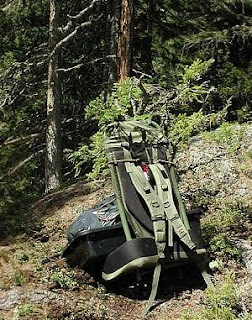
A backpack with an aluminium frame in which larger trees can be placed will often be indispensable for long trips. There are special devices designed for hunters enabling them to transport a large amount of game over difficult terrain. Obviously, these can also be used for large trees. A large knapsack will serve for carrying most of the tools, but will usually be too small for a tree.
Several bottles or a large container of water are important for the one undertaking this task and also, perhaps, for the tree. Bringing along a camera is a good idea.
Collectors often travel through areas little frequented by other people. A small accident that generally is not very serious may become a tragedy.
For that reason, a first aid kit should always be carried. Carry a mobile phone with emergency telephone numbers. If you are accompanied, it is always advisable for the others to also carry a mobile phone or walkie-talkies.
In view of the list of tools, it is understandable that some people look first for a road for their cars and then a suitable tree. But do not be discouraged yet.
The expertise is in finding, not in looking

Whoever goes into the mountains in search of 'ready made' trees to be used right away as bonsai is going to be very disappointed. With very few exceptions, there are no trees out of doors that can be transplanted directly to a pot and classified as bonsai. At most, good raw material can be found, that is, material with more or less interesting shapes that provide starting points for the experienced enthusiast. In truth, the most worrisome and complicated trees are very often the best ones. For that reason, only an enthusiast with sufficient years of experience will be capable of finding truly great material, because he will be able to see on the site itself the basic shape and will know how to decide if the tree can be used or not.
The expertise is in finding, not in looking. This means that there is not much likelihood of success if one goes searching with the firm expectation of finding a pine pre-bonsai that would be ideal for the 'formal upright' form passing by all the deciduous trees and even pine trees that might lend themselves perfectly to being shaped in other forms.
There are some people who go into the forest to look for mushrooms and always find more than the rest of the group. There are fishermen who always catch more fish than all their companions. There are bonsai enthusiasts who find many more good trees than an entire group.
What do these people have in common? They know secret or even several that the others possess, but the likelihood of having such persons as instructors is slight.
Then how can you discover one of these secrets? Clearly, everyone will think that the secret is in knowing the right location. Well no, the secret lies in recognising guidelines which works as follows:
The bonsai enthusiast goes walking through the field and at some point in time finds a tree that meets all the requirements for being good bonsai. A suitable location has been found; where there is one, there will be another close by.
It is not a question of knowing an especially good place, but of finding each time a location that, even in areas where you have never been before. If you go looking in another location and by chance find another pre-bonsai….well, you can start to draw conclusions.
What do both locations have in common? What is the reason for the trees being so small in both places?
If, for example, in both cases it is a location that is close to an area of wild pasturage, where in winter deer come to nibble the shoots of small beeches, you have found a clue. It follows that you will have greater possibilities of success if you go to places where there is pasturage for livestock.
Whoever repeatedly enjoys this type of success will recognise that there is a whole series of clues like this that narrows the search. Acquire more knowledge about trees, open a dialogue with them, understand them better and you will find more and more suitable specimens to be worked on and to be converted to bonsai.
Where can you look quickly?
Start in a place for which you have a permit for collecting trees or a least, where the possibility of obtaining it exists. There is no sense in looking for the best pre-bonsai in nature reserves if collecting there is not permitted.
Where are the best possibilities?

Generally in areas that are considered extreme. That is , places that offer places that offer a species minimum necessary for sustaining life, the limit. If a tree is found in a location where there is little available to keep it alive, but too much to cause it to die, it will remain small, grow compactly and will develop an interesting shape. A location that can be called extreme will often depend on the species. A pine tree continues growing strongly in practically pure sand, while the same soil causes great difficulties for a beech tree.
Consequently, a beech that by accident is growing in a soil of pure sand can be very good beginning material. For the pine tree, more conditions need to be lacking, as for example, a greatly exposed location on a very inclined slope in the crack of a rock.
High areas generally offer more possibilities for success. But there are a large number of slag heaps, quarries, embankments, quagmires, declivities with steep slopes, banks of streams that become torrents in the Spring, rocky terrain, large stones covered with plants and coastal regions, that is, almost any places that the farmer calls 'uncultivated'.
The main problem is that trees collected from these areas have the very great disadvantage of being very weak. Consequently, the likelihood of their survival is very slight right from the beginning.
For the survival of a collected tree, locations that are much more favourable, that are actually good for the growth of the species, but where, due to environment causes that occurred a single time or over many years, trees cannot develop naturally. This may be the case along the edges of roads where vegetation is regularly cut down, pastures where animals nibble the shoots and branches or where even the trunks of small trees are broken or the farmer cuts back the vegetation, edges of forests where deer nibble the new shoots in Spring and the renewed growth in Winter, slopes left after avalanches where damages is repeatedly done, but without the trees finally dying, military training areas where trees are constantly broken, but not killed.
All these places, with the exception of avalanche slopes, have various advantages. In most cases it is possible to obtain permit for collecting, since it is ethically sustainable to collect a tree which if not collected would not only suffer, but also would be unlikely to survive. Since the trees are growing in good soil and are relatively young, they will have a healthy, ample rootball that is very helpful to their survival after being collected.
Inexperienced enthusiasts usually think that most good trees are found in very hidden away and untouched areas. They are completely mistaken.
Man, with his machines and animals is the best generator of raw material for bonsai. The best trees are found especially along roadways or even in towns. Fantastic specimens can be found in places where for decades a hedge has been pruned, where someone has pruned away the trees in the garden, where many years ago livestock passed through the thicket, nibbling on it, where someone for several decades has kept small trees in pots or in a cemetery where a shrub was kept small. Logically, a permit cannot always be obtained for removing the tree, but nothing is lost by asking.
The best time to look for trees is when it is not possible to collect them due to the season, since you will not be tempted to carry them off and you will not take the first one you will find. Since, for the tree to be collected with any likelihood of success, you only have a little time in Autumn and a few weeks in the Spring, there is a great deal of time to make a selection.
Evaluate the Tree
An outdoor specimen with bonsai potential has little value if you cannot be sure that it is going to survive before you dig it up. To be able to determine that, it is necessary to examine the roots. Also, you have to know what type of tree it is and what its probable reaction will be. The roots must be as compact as possible so that a solid rootball can be dug up. Sadly, many times this is not the case.
In addition, before removing the tree from the ground, you should check to see that it really has possibilities for becoming an attractive bonsai when it is shaped. The key elements are thick surface roots, the nebari and the lower area of the trunk. If these parts are not attractive now, they probably never will be. Usually, everything else can be arranged in some way.
Does the trunk have the right thickness for the final shaped height of the tree in accordance with the position of the branches? If the trunk is too thin, it is best to leave it where it is. Perhaps the crown can be pruned so that it may recuperate over the years.
Does the trunk have useable movement and appearance of age? Does the tree have lower live branches from which you can form a new apex if necessary?


A 500+ year old Juniper collected from the Rocky Mountains collected by the author, and the same tree pictured with the Walter, 8 years after collection.
There are many dead trees next to live ones in areas where growing conditions are extreme. If you set out to look for material in Spring or Autumn, especially with deciduous trees, it may happen that it is impossible to tell at first glance if you have a dead tree or a live specimen before you. The answer to that should be clear by looking at the buds, but, in case of doubt, scratching off a little of the bark with a fingernail and verifying that the tree is green should give an answer.
Trees rooted in cracks in rocks or flat stones generally have created a very compact rootball and, in many cases, due to lack of nutrients and water, have grown into an interesting shape. Very often, these trees can be collected immediately with a compact rootball. If you are very lucky and the tree lets itself be extracted easily, you can even risk collecting it out of the usual season.
Other places that produce compact rootballs are moist areas. These areas are not necessarily wet during the entire year and over the whole surface. In marshy soils, small islands with very thin layers are created that may become quite dry in Summer. In these areas of central Europe, as in Scandinavia and Siberia, Scots pines (P. sylvestris), Swiss mountain pines (P. mugo montana) and Birch (Betula pubescens) are found. These trees can only grow during a short period, during those weeks in which the subsoil is permeated by air and quite dry. For this reason, they often grow with very little development in height and generally have a bark with a great deal of character. These trees have compact rootballs and can be removed from the soil with a sharp shovel without losing many roots and with high probability of survival.
Just the opposite occurs with trees that are growing in sand or gravel. They attract attention because of their beauty, but, in general, they are very difficult to collect. Often the roots of the small tree penetrate many metres (yards) below the poor soil searching for nourishment and it is not possible to remove them without ruining the greater part of the indispensable fine roots. In these cases, do not even think of taking the tree away, not even as a test. It is much more sensible to opt for improving the rootball and compressing the ramification right there, in situ.
The rootball can be improved by digging a deep ditch around the tree. To do that, use a sharp-bladed shovel since areas with clean cuts stimulate the new growth of fine roots. If the soil is very stony, the ditch can also be dug with a heavy pickaxe. It is important to keep the rootball intact and of a sufficient size for the tree to go on living without problems. Pruning the roots allows for the creation of many new roots and, particularly, for the growth of new root tips from the old ones. This process is similar to the pruning of branches that stimulates the development of buds from aged wood.
Since the rootball is considerably reduced, it is advisable to prune the crown proportionately. To do that properly, it is necessary to be thoroughly acquainted with the reactions of the tree. Deciduous trees have a totally different reaction from that of conifers.
A deciduous tree will usually bud from old wood if the branches are pruned a great deal. And the same can be said of the roots.
It is much more difficult with conifers. They cannot bud so easily from old wood, especially if needles are not left on so that the tree can continue to feed itself. That means that if an intense pruning (that for a deciduous tree would be suitable and would even keep it healthy) were carried out on a conifer, it would die.
For that reason, it is not advisable to prune a conifer too much if its roots have been worked on a great deal.
Once the tree's strength is restored, it can be pruned little by little as intended for its development as a bonsai. Trying to 'balance' the crown and roots of the tree, as is often recommended, makes no sense. The tree itself knows much better what to do. Even Japanese collectors have had the same experience. After digging up a juniper, they leave the branches and needles intact. A year later, they can prune away long branches.

This is a mugo pine with lots of potential. Unfortunately it grows in a
forested surrounding, on very rocky and sandy grounds. It will be
extremely difficult to get enough roots when trying to lift it right away.
Proper preparation over a couple of years is the key here.
Logically, once the ditch is dug, it has to be filled in again. For that, using good soil stimulates the growth of roots. The method described here is basically a layering of the strongest roots. In layering, it is especially important that the new roots can be surrounded by soil that can retain water, but that can also drain well so that the necessary oxygen can reach the roots. Soil with these characteristics is very hard to find in the majority of places where you have found interesting material, precisely because the trees are interesting because they are found in poor soil. Anyone who wants to do it particularly well will have to bring along soil that has the same characteristics as the right soil for bonsai, according to the species concerned.
Dan Robinson has had spectacular successes in collecting junipers and pines that were considered uncollectable in the semi-deserts of the Rocky Mountains. Their roots were growing in extremely dry gravel and were too long. Dan cut off all the large roots on one side of the plant and tied a perforated plastic bag full of soil mix similar to that used for layering around the cut-off areas. He kept the plastic bag generally moist and, after a time, applied the same procedure to the other side of the tree. After this process, he could take the tree home without worrying, and with a large number of new fine roots.
Trees are often found that, due to the dropping off of their own leaves or needles, have over time created their own compost directly underneath the crown. It is a good idea to remove this soft soil very carefully and fill the ditch with it. This will also obtain the secondary effect of uncovering the beginning of the nebari. On the other hand, this is important for recognising the possibilities for future shaping and, on the other hand, since generally the structure of the bark of the trunk and that of the part of the trunk that has been underground a long time are very different, it will allow for uncovering the trunk early in the process.
To be able to obtain a natural trunk base, the structure of the bark must be identical. The bark becomes very rough due to atmospheric influences and these atmospheric influences have not affected the part that is underground. However, care must be taken not to leave the fine roots around the nebari uncovered on the surface. If the upper layer of soil were removed from them, they would likely die.
After the ditch is filled, the tree must be pruned. But the branches ought not to be pruned indiscriminately. At that time, you should have a fairly clear idea o the future shaping and should remove only those branches that you are sure you are not going to use for the design concept you have. In the case of conifers, it is advisable not to prune too close to the trunk and to leave a sufficiently long piece of the pruned branch so that, if need be, in the future it can be shaped as a jin. There will always be time to cut it off completely later on. For Junipers and Spruce, prune carefully, since they ought not to lose more than 25% of the crown at one time.
Logically, these preparations can only be made at certain times of the year. For deciduous trees and conifers, the best time is generally at the beginning of Spring. Just when the buds are starting to open, that is, during a time limited to a few days, is the safest. The exact moment varies depending on the type and also, to a large measure, on the climate and microclimate. All that remains is for the bonsai enthusiast to familiarise himself with the tree and 'to think like it'.
In central Europe, the best time for collecting trees is between the end of March and the end of April; in the Alps and northern Europe, the best time may extend into May or even June. For conifers a good time for preparation is the end of the growing period (after the formation of the buds for the next year). But as I have already said, the exact time depends on the type of tree and the climate.
In central Europe, it is between the end of August and the end of September. In the special case of the ordinary Juniper (J. communis) and the Norway Spruce (P. abies) it is better to collect them at the end of Summer since they experience a strong growth of roots in Autumn.
This way they can survive the cold season of the year much better and in Spring they will have several weeks of time to continue growing before the hot season starts. That is just the time when they can be removed from the soil in the mountains. In the case of, it may be advisable to collect them in Spring or at the beginning of the Summer, since at that season, you can see if they are in good health. Healthy trees can be marked to be collected in Autumn.
Sometimes, coming back many years later, it is impossible to find a tree on a craggy terrain. In order to find it, it is advisable to remember some showy stone or a large tree. Visual memory is a great advantage. A drawn map is not a luxury. Even GPS receivers can be used.
Once a tree has been prepared, it should be left in peace for as long as possible between preparation and collecting; for at least one active growing period and, even better, two to four of them. But the bonsai enthusiast must be prepared to find a hole on the day he goes to collect the tree he prepared. And this also forms part of the ethics of collecting; the work of others must be respected and a tree that has obviously been prepared should not be removed from the soil, even if it is a very good one. Usually bonsai enthusiasts are honest.
Sometimes you may find a fabulous tree, but one that is impossible to collect. In cases like this, the possibility of layering must be considered. This works, for example, with Junipers including very old ones.
When searching and collecting, bringing a camera is always worth the trouble. A photograph of the place will always be incalculably if the tree has become a lone tree ten years later. Also, a photograph of the tree can be taken that will augment your collection, if it is not possible to collect it.
Digging the Tree Up
Whether because the tree was prepared well ahead of time, or because the tree has a naturally good rootball, the time will come when it will have to be removed from the soil if you want to make it into a bonsai one day. To do that it is essential that that time be the right time.

Once that time has come, the experienced bonsai enthusiast will have prepared one or more large-sized containers. He will have placed screens over the holes, mixed a large amount of soil with good drainage and, in short, will have prepared the whole work area well.
If it not has been done already, this is the time to prune away everything you are certain you are not going to need in shaping the new bonsai. If however, nothing has been definitely decided on, it is better to stop for a moment to think about what is going to be done.
The likelihood of the tree's survival will be greater if, shortly before removing it from the ground, a heavy rain has fallen. Thus the tree will have absorbed a large quantity of water and will be capable of withstanding the shock better. Of course, this doesn't necessarily mean that on the day when you carry out the operation it has to be raining cats and dogs!
During subsequent weeks, it would be better if the climate where you are going to locate the tree were pleasant. High temperatures without rain are like poison for most trees, including even those that have not been collected recently. If there is soil, grass weeds, stones or other material on top of the rootball, you should remove it very carefully.
With a sharp-bladed shovel, try to remove the largest rootball possible, although if the rootball is very stony, it may be better to work very carefully with a strong pick. The rootball should have a diameter of at least seven or eight times the thickness of the trunk. That means that if the trunk has a diameter of 2" (5cm), you will have to mark a circle with a diameter of at least 14" (35cm).
The depth depends on the terrain and the type of tree. For safety and in case of doubt, it is best to dig very deep, by at least three times the width of the tree. It would not be the first time that, after removing a tree from the soil, it is found that the main roots went much deeper than expected. What appeared to be the roots of the tree may turn out to be the roots of small nearby shrubs.
It is also advisable to check the position of the roots before removing the tree from the soil. To do that, clear the base of the trunk, grasp the tree firmly by the trunk and move it carefully. With a little experience it is possible to determine in what direction the main roots are growing.
In wet areas, they usually grow toward the side that gets the sun and, in dry areas, toward the shady side. Many times, it will be necessary to remove a lateral root mass if the main roots have a strong tendency toward one side.
It may also happen that roots are found that are so thick that it is not possible to cut them cleanly with the shovel. For that, sturdy branch cutters should be on hand in order to make clean cuts on branches or roots up to about 2 ½" (6cm) in thickness.
The majority of trees have a main root that penetrates the soil vertically, almost precisely underneath the trunk. It is essential, although difficult, to cut it back very carefully. To do that, the shovel is introduced from a certain distance, on a level, underneath the tree. If it doesn't work, it is also possible to work underneath a tree with branch pruners. For very large trees, it may be possibly necessary to remove them with a block and tackle anchored to another tree. In any case these tasks must be performed very carefully in order not to harm the small roots. It is not so important as you often think it is for the rootball to remain intact. In fact, it is most likely that, in finally removing the tree from the ground, it will fall apart. It is much more important to keep the largest possible amount of fine roots. I have often have good results by shaking off the rootball very carefully immediately after removing it from the soil. Clearly, you must always remember to keep a great deal of fine soil, so that the tree can preserve its mycorrhiza.
If it is possible, you should not try to remove the tree from the hole by pulling upwards on it, but instead by pulling it to one side, placing a cloth underneath it and then making it roll over the cloth toward one side. Then it should be possible to reach under the tree from the opposite side and pull the cloth. Next, knot the cloth so you can then proceed to remove the tree from the hole. Clearly, if the rootball is truly compact, you can take it right out of the hole and then wrap it.
Medium sized or small trees can be put into plastic bags. For large trees, possibly plastic garbage bags would be best, since they can be closed very well and they hold moisture for a long time. If you want to do things correctly, moss should be brought to fasten around the roots, although you can substitute wet newspaper for that.
Sometimes a good tree is found, but it is not possible to transport it immediately. By wrapping the rootball with wet moss and leaving it in the shade, you can leave it this way for several days without any problem. In any case, it is important that, during the often long and difficult transportation to the car, the fine roots not be damaged and, above all, that they not dry out. Some rootballs crumble, damaging many roots due to shaking during transportation. For this reason, it is often advisable to remove soil from the rootball with great care before transporting it.
However, in the case of Junipers and pines, this should be avoided as much as possible, since these species depend a great deal on having the roots keep the original soil of the place where they were found with the proper mycorrhiza. If the road to be traveled is very long, enough water for the person to be burdened with it should be carried.
Generally, trees that are found are much larger and voluminous than you want. When planting them, it is advisable to prune them to a greater or lesser extent. If you do this task before transporting it, you will make the operation easier.
Once out of the ground, it will be much easier to check whether you have pruned off everything that you are not going to need now you can see the tree in much greater detail (including the beginning of the rootball) and it is much easier to get an idea of possibilities for shaping.
The experienced bonsai enthusiast will determine the basic shaping right there and will prune off what is not going to be part of said shaping.
But, be very careful with conifers. Pines, Spruce and, although to a lesser extent, the Larch and Juniper suffer greatly if they are pruned too much. Their metabolism will be so confused that they will then have great difficulty in developing or they might even die in spite of having a fine rootball. You can tie an excessively voluminous crown with the rope that we advised you to bring at the beginning of this series of articles, although adhesive tape for wrapping packages may be substituted for it.
The best results are obtained with trees that do not have to be dug up, that is, those that have rooted in a crack or over a stone and only have to be lifted off. Perhaps it will be necessary to cut off some roots with pruners or even a saw. These quasi-bonsai that have had to survive most of their time with very little space for their roots, can be transplanted directly into a pot and, after one growing season, it is already possible to begin shaping them.
If you have the luck to know a location where trees can be collected from rocks, go equipped with the necessary tools. It is very useful to have a large, solid pick available. It is also very helpful to carry a crowbar and a heavy hammer. Perhaps you will have to work with a block and tackle. A special band saw that can be placed around a root so it can be cut even in difficult positions, is worth its weight in gold.

This mugo pine sits right on top of a big boulder.

This is the very best situation for outstanding material with very high survival hopes.

It should be possible to collect it with a firm rootball. But here one can see that for some big trees extra efforts are necessary.

After cutting the tree's roots and reducing the foliage, a wrench is used to pull it off the rock.


When working with roots, never consider whether the rootball will fit into a pot or not since that is not the main problem. First you must get the tree to survive and to do that it will probably be too large for any pot. After two growing periods in the wooden box, you will be able to dig the tree up again and prune the rootball more severely. Often it will be better to plant it again in the same place and leave it for one or two more years before pruning the rootball again to obtain the right size for the final pot. Do not cut off the thick roots since these roots will have importance for the tree corresponding to their diameter. It is always better to think about the method of pruning incorporating the training in it. There is always the possibility of layering.
Nick Lenz who, for many years has been working with native trees in the eastern United States, thinks that more than 50% of all trees collected do not die because the rootball is too weak, but mainly because of parasites that have been brought along with it.
The tree, having been weakened due to transplanting, is not capable of mobilising its natural defences. So, as prevention, Lenz recommends subjecting recently collected trees to a treatment with insecticides and fungicides.
He even goes so far as to put the trees in a large plastic bag so that the air will remain contaminated and will kill the last parasite, at the same time maintaining very high levels of humidity in the air. The trees are subjected to this treatment in the same place where they were found so that the parasites do not end up infecting the entire bonsai collection.
Make a hole with a shovel for placing the tree in the soil of the wooden box. The hole should be quite a bit larger than the rootball. The tree is placed in the centre, with the help of another person, if necessary, to hold it. If the tree is too large and, due to the shape of the rootball, it appears that it is not going to remain very firm, it is advisable before closing the hole to put in a strong stick to which the tree can subsequently be fastened.
The soil is usually placed over the hole. It should never be tamped down, since that would hinder the subsequent supplying of air and, also, would break some of the fine roots. Next, the rootball has to be 'muddied'.
This means that it must be watered with special intensity so that the soil is distributed well among the roots, securing the tree in its position. Now you can proceed to water the tree, adding a growth hormone such as vitamin B2 or Super Thrive to the water.
Some authors (Peter Adams for example) explain that, before planting the rootball, they leave it an entire night in a receptacle of water to which a growth hormone has been added. Nothing will happen if, in the beginning, the level of the soil is higher around the trunk than in the rest of the box. Over the time, it will level off.
If the wooden box is in full sunlight, the crown can be covered with a shade netting that can be found in various densities in specialised gardening shops. This netting prevents drying since it will reflect more than 50% of the sun's rays. In addition, this mesh will permit the creation of a moist microclimate that will be beneficial to the tree during the first weeks. It can also be sprayed with anti-evaporation protection as is done in greenhouses when valuable conifers are transplanted. Anti-evaporation protection is a solution that is mixed with water and applied to the needles with a sprayer. This substance creates a fine layer of wax that is not impenetrable, but that reduces evaporation notably, depending on the concentration. The film is rain-resistant, but disappears by itself after a few weeks.

As has been said, the container can be a wooden box, but also a large plastic tub, a plastic washbowl, or an extra large bonsai pot if you have one available (which would be unusual). Logically, all these receptacles must have one or, much more advisable, several holes for drainage. Some professionals insist that it is essential to have the soil sterilised.
The rootball does not have to be cut to the measurements of the container, a container must be found in which the rootball will fit. It is preferable to have the tree fit exactly in the container. It is not good if the container is too large because too much moisture will accumulate in the soil that could cause the roots to rot. The container must be strong enough to support the weight of the tree, generally large and heavy trees, together with the soil. It must also be kept in mind that almost certainly in the coming months the whole thing will have to be moved, so very large trees it is advisable for the container to have handles.
As has been said, the mix that you use now will be more permeable than the soil that will be use subsequently as bonsai soil.
Good results have been obtained with a mixture of 40% coarse sand, 30% akadama and 30% composted bark humus. Pumice stone has proved to be very efficacious as soil for the bottom of very large receptacles. It has characteristics similar to those of akadama or lava granules, but it is lighter. Many enthusiasts avoid using old soil for fear of bacteria and the remains of fertiliser. However, it is advisable to add soil from healthy trees in order to include mycorrhiza.
Immediately after planting the tree, the soil has to be watered thoroughly. Afterwards it only has to be kept relatively moist so that the roots will be stimulated to grow. On the contrary, the crown has to be sprayed with water daily to keep it always moist. In no case should fertiliser be applied before the tree shows clear signs of growing.
The container should be placed in a shady location, if possible, away from currents of air. Here it must stay until the tree shows clear signs that it has caught on.
Then it should be placed in semi-shade and, subsequently, in sunlight. It is important to protect the tree right after collecting from frosts or desiccating winds.
To do that, the ideal is to keep it in a cold greenhouse for the first year. For very valuable trees, a heating system may even be installed in the floor, a system that you can find in shops specialising in accessories for greenhouses. It appears that in Japan they even install small nozzles in the floor, under the roots, that regularly blow warm vapour on the cold roots.
Serge Clemence has developed a method with which he has succeeded in getting even trees with poor roots to catch on well. He carries a rucksack full of sphagnum moss to the spot where he found the tree. Immediately after digging it up, he wraps the rootball with the moss and ties it.
Once he arrives home, he places the tree in a receptacle just as it is and adds soil around it. He says the success is astonishing. After a growing period, the moss is full of fine roots. Even trees with fibrous roots collected from cracks in rocks, have caught on this way. With this method it would also be possible to plant trees in soil outside. Nick Lenz has developed a method for making a larch layer easily with sphagnum moss. He discovered that the layering only worked well with live sphagnum moss and thinks that it is due to some hormone. Logically, this fact would be a great endorsement for Serge Clemence's method.
Wait at least one growing period before starting to shape the tree. It is important to make clear that you are talking about growing periods and not months. If you collect a tree in Autumn and plant it immediately in a wooden box, it may catch on that Autumn, but you have to wait until it has definitely caught on in the next Spring or Summer before starting any preparations for shaping.
If a tree was dug up in Spring, possibly the first shaping tasks can start in Autumn if it has enjoyed a Summer 'crowned with successes'.

This table shows the timetable for a collected tree to be converted to a bonsai.
For example, for an old conifer (more than 50 years old) with a good rootball, between 3 and 7 growing periods may be necessary before being able to start shaping, while shaping itself may take between 5 and 10 periods. From the time a tree is found until the day when it can be called a bonsai, between 8 and 17 periods or, indeed, years pass. If the roots were not in an ideal condition from the beginning, the complete process may even take 11 to 22 growing periods. It is clear that shaping continues over many years.
Collecting Trees from the Wild Part One
by Walter Pall

The author with an ancient collected Juniper
The Ethics of Collecting Trees from the Wild
There are opposing positions on this subject. Both those who defend this activity and those who oppose it have their reasons for adopting one position or the other, reasons that will be explored.
Why obtain material for bonsai from the Wild if it is something that is not very attractive and, in addition, looks as if it would be a very laborious task?
Those who are favour of it have several reasons in defence of their position:
· Many native species, often the best for bonsai training, are very difficult or impossible to find in a nursery.
· In the nursery, trees are cultivated to grow as rapidly as possible and generate money. This means that, in many cases, they will not have the desired quality for bonsai.
· Trees grown from seed or cuttings need decades to reach a quality similar to that of trees collected from nature. Even then, there is an enormous difference in quality.
· The character of a tree only develops with age. A collected tree expresses the struggle for survival through its appearance and bark. This is very difficult to achieve with nursery seedlings.
· Collected trees have a unique history, written expressly for each one of them, making them more interesting and desirable.
· Collecting trees from nature can be fun and some might even go so far as to consider it a sport.
Why should these trees not be collected?
Those who oppose this activity also are supported by good reasons:
· In the majority of cases, the trees will not survive the procedure.
· Even though permission maybe available, it is a license to kill if you do not know exactly what you are doing.
· Independent of the fact that trees are never collected in nature reserves or parks, they always come from a specific biological habitat.
· Collected trees often need years to re-establish themselves before actual shaping can begin.
· For those who are not experts, many trees collected from the mountain have too much character. Quite possibly they will not know how to make use of their potential.
Of course in all civilised countries, just going into fields anywhere and collecting trees is forbidden. There is always a property owner, even though it may be the government.
For that reason, it is essential to get permission for the collection of plants. It is best to study beforehand where and what it is that you want to collect. Generally it is possible to obtain permission, except for trees in nature reserves or parks. If you explain to the forest ranger or farmer that you are looking for very small trees of lower quality and that afterwards, footprints will be erased and holes filled, usually you can count on getting a favourable response. Often, they can even tell you where you should begin looking.
They may also think you are crazy, but that is something you will have to accept.
It is best to get written permission in order to avoid difficulties that may arise later on. Many good areas belong to farmers who have a habitual relationship with trees that often even includes being bothered by them. Sometimes, a small compensation accompanied by the promise that holes will be filled is sufficient.
Clearly, you may also find people who think that a fortune can be made from bonsai. For that reason, it is better to say young are looking for specimens for your garden. It is a small lie that harms no one.
The collector of bonsai may face danger during the hunting season, generally in Autumn, so be particularly careful in this season.
Anyone who does not have much experience with trees and does not know with certainty how and if it possible to keep a collected tree alive ought not even attempt it, not even with the mandatory permit.
An essential requirement for this activity, in addition to a permit, is having extensive knowledge and experience, at least in gardening.
Anyone who does not know the tree and its needs is better off abstaining. Although the technical term may be 'material for bonsai', the bonsai enthusiast should never forget that a tree is a living thing that must be treated properly.

The base of this Juniper in the Rocky Mountains is more than 12" (30cm) wide. It is possibly over 500 years old, but, in spite of that, it can be collected because it is found in a crack full of humus
Many times the experienced collector finds a tree that is good itself, but knows that after collecting there will not be much chance of it surviving. It is a very common situation since the best material for bonsai is usually found in locations where the conditions for survival are very harsh and so the trees are weak and greatly castigated by nature often with roots that are very ramified and exposed.
This means that you will not find a compact rootball and the majority of the roots will break off and be lost in the collecting process. The best rule is: in case of doubt, leave the tree where it is.
Logically, no matter how good the tree may be, do not dig it up if the season is not right. Most trees that are found by chance and collected during vacations are not likely to survive.
If you find several suitable trees, but are unsure if they will survive, it is best to take only one in order to gain experience and to be able to collect the others later on.
Locations can be found where, by collecting the trees growing there, you are even saying them certain death. Such would be the case for example, with those places where highways or roads through the forest have been constructed or widened, where ski-lifts are constructed or under lifts or high tension cables under which all types of new growth is regularly destroyed.
As you may have read, even though it does not have to do directly with bonsai, there are organisations dedicated specifically to saving trees.
They may also be found in pasture land where trees are regularly cleared or in gravel pits and quarries that have to be enlarged.
So, therefore, these are locations where you can collect trees that are practically condemned without feeling guilty.
The chief objective of one who intends to collect a tree ought to be keeping it alive. The chance of survival of the tree depend on:
· The experience of the enthusiast
· The type of tree
· The special conditions of the location
· The preparation of the tree
· The tools used
· The season of the year
· The amount of rain in the location where it is to be collected (it has to have rained in previous days)
· The difference in climate between the place where it was found and the location where it will be placed (the greater the change, the more danger for the tree)
· Care after collecting
Tools for collecting trees

The serious enthusiast has the proper tools. A strong, sharp-edged shovel, long-handled pruning shears, pruning scissors, a strong pickaxe and a collapsible saw are needed.
Sometimes heavier equipment is needed such as a block and tackle or a chainsaw.
For trees that are found on large rocks or on walls of rock, climbing equipment is necessary. A rope at least 75 feet (25m) long can also be very useful. Trees can be lowered with it and it can also assure one's safety while working on dangerous terrain. In addition, a large quantity of wet cloths will be needed for wrapping the rootball as well as large plastic bags.
A backpack with an aluminium frame in which larger trees can be placed will often be indispensable for long trips. There are special devices designed for hunters enabling them to transport a large amount of game over difficult terrain. Obviously, these can also be used for large trees. A large knapsack will serve for carrying most of the tools, but will usually be too small for a tree.
Several bottles or a large container of water are important for the one undertaking this task and also, perhaps, for the tree. Bringing along a camera is a good idea.
Collectors often travel through areas little frequented by other people. A small accident that generally is not very serious may become a tragedy.
For that reason, a first aid kit should always be carried. Carry a mobile phone with emergency telephone numbers. If you are accompanied, it is always advisable for the others to also carry a mobile phone or walkie-talkies.
In view of the list of tools, it is understandable that some people look first for a road for their cars and then a suitable tree. But do not be discouraged yet.
The expertise is in finding, not in looking

Whoever goes into the mountains in search of 'ready made' trees to be used right away as bonsai is going to be very disappointed. With very few exceptions, there are no trees out of doors that can be transplanted directly to a pot and classified as bonsai. At most, good raw material can be found, that is, material with more or less interesting shapes that provide starting points for the experienced enthusiast. In truth, the most worrisome and complicated trees are very often the best ones. For that reason, only an enthusiast with sufficient years of experience will be capable of finding truly great material, because he will be able to see on the site itself the basic shape and will know how to decide if the tree can be used or not.
The expertise is in finding, not in looking. This means that there is not much likelihood of success if one goes searching with the firm expectation of finding a pine pre-bonsai that would be ideal for the 'formal upright' form passing by all the deciduous trees and even pine trees that might lend themselves perfectly to being shaped in other forms.
There are some people who go into the forest to look for mushrooms and always find more than the rest of the group. There are fishermen who always catch more fish than all their companions. There are bonsai enthusiasts who find many more good trees than an entire group.
What do these people have in common? They know secret or even several that the others possess, but the likelihood of having such persons as instructors is slight.
Then how can you discover one of these secrets? Clearly, everyone will think that the secret is in knowing the right location. Well no, the secret lies in recognising guidelines which works as follows:
The bonsai enthusiast goes walking through the field and at some point in time finds a tree that meets all the requirements for being good bonsai. A suitable location has been found; where there is one, there will be another close by.
It is not a question of knowing an especially good place, but of finding each time a location that, even in areas where you have never been before. If you go looking in another location and by chance find another pre-bonsai….well, you can start to draw conclusions.
What do both locations have in common? What is the reason for the trees being so small in both places?
If, for example, in both cases it is a location that is close to an area of wild pasturage, where in winter deer come to nibble the shoots of small beeches, you have found a clue. It follows that you will have greater possibilities of success if you go to places where there is pasturage for livestock.
Whoever repeatedly enjoys this type of success will recognise that there is a whole series of clues like this that narrows the search. Acquire more knowledge about trees, open a dialogue with them, understand them better and you will find more and more suitable specimens to be worked on and to be converted to bonsai.
Where can you look quickly?
Start in a place for which you have a permit for collecting trees or a least, where the possibility of obtaining it exists. There is no sense in looking for the best pre-bonsai in nature reserves if collecting there is not permitted.
Where are the best possibilities?

Generally in areas that are considered extreme. That is , places that offer places that offer a species minimum necessary for sustaining life, the limit. If a tree is found in a location where there is little available to keep it alive, but too much to cause it to die, it will remain small, grow compactly and will develop an interesting shape. A location that can be called extreme will often depend on the species. A pine tree continues growing strongly in practically pure sand, while the same soil causes great difficulties for a beech tree.
Consequently, a beech that by accident is growing in a soil of pure sand can be very good beginning material. For the pine tree, more conditions need to be lacking, as for example, a greatly exposed location on a very inclined slope in the crack of a rock.
High areas generally offer more possibilities for success. But there are a large number of slag heaps, quarries, embankments, quagmires, declivities with steep slopes, banks of streams that become torrents in the Spring, rocky terrain, large stones covered with plants and coastal regions, that is, almost any places that the farmer calls 'uncultivated'.
The main problem is that trees collected from these areas have the very great disadvantage of being very weak. Consequently, the likelihood of their survival is very slight right from the beginning.
For the survival of a collected tree, locations that are much more favourable, that are actually good for the growth of the species, but where, due to environment causes that occurred a single time or over many years, trees cannot develop naturally. This may be the case along the edges of roads where vegetation is regularly cut down, pastures where animals nibble the shoots and branches or where even the trunks of small trees are broken or the farmer cuts back the vegetation, edges of forests where deer nibble the new shoots in Spring and the renewed growth in Winter, slopes left after avalanches where damages is repeatedly done, but without the trees finally dying, military training areas where trees are constantly broken, but not killed.
All these places, with the exception of avalanche slopes, have various advantages. In most cases it is possible to obtain permit for collecting, since it is ethically sustainable to collect a tree which if not collected would not only suffer, but also would be unlikely to survive. Since the trees are growing in good soil and are relatively young, they will have a healthy, ample rootball that is very helpful to their survival after being collected.
Inexperienced enthusiasts usually think that most good trees are found in very hidden away and untouched areas. They are completely mistaken.
Man, with his machines and animals is the best generator of raw material for bonsai. The best trees are found especially along roadways or even in towns. Fantastic specimens can be found in places where for decades a hedge has been pruned, where someone has pruned away the trees in the garden, where many years ago livestock passed through the thicket, nibbling on it, where someone for several decades has kept small trees in pots or in a cemetery where a shrub was kept small. Logically, a permit cannot always be obtained for removing the tree, but nothing is lost by asking.
The best time to look for trees is when it is not possible to collect them due to the season, since you will not be tempted to carry them off and you will not take the first one you will find. Since, for the tree to be collected with any likelihood of success, you only have a little time in Autumn and a few weeks in the Spring, there is a great deal of time to make a selection.
Evaluate the Tree
An outdoor specimen with bonsai potential has little value if you cannot be sure that it is going to survive before you dig it up. To be able to determine that, it is necessary to examine the roots. Also, you have to know what type of tree it is and what its probable reaction will be. The roots must be as compact as possible so that a solid rootball can be dug up. Sadly, many times this is not the case.
In addition, before removing the tree from the ground, you should check to see that it really has possibilities for becoming an attractive bonsai when it is shaped. The key elements are thick surface roots, the nebari and the lower area of the trunk. If these parts are not attractive now, they probably never will be. Usually, everything else can be arranged in some way.
Does the trunk have the right thickness for the final shaped height of the tree in accordance with the position of the branches? If the trunk is too thin, it is best to leave it where it is. Perhaps the crown can be pruned so that it may recuperate over the years.
Does the trunk have useable movement and appearance of age? Does the tree have lower live branches from which you can form a new apex if necessary?


A 500+ year old Juniper collected from the Rocky Mountains collected by the author, and the same tree pictured with the Walter, 8 years after collection.
There are many dead trees next to live ones in areas where growing conditions are extreme. If you set out to look for material in Spring or Autumn, especially with deciduous trees, it may happen that it is impossible to tell at first glance if you have a dead tree or a live specimen before you. The answer to that should be clear by looking at the buds, but, in case of doubt, scratching off a little of the bark with a fingernail and verifying that the tree is green should give an answer.
Trees rooted in cracks in rocks or flat stones generally have created a very compact rootball and, in many cases, due to lack of nutrients and water, have grown into an interesting shape. Very often, these trees can be collected immediately with a compact rootball. If you are very lucky and the tree lets itself be extracted easily, you can even risk collecting it out of the usual season.
Other places that produce compact rootballs are moist areas. These areas are not necessarily wet during the entire year and over the whole surface. In marshy soils, small islands with very thin layers are created that may become quite dry in Summer. In these areas of central Europe, as in Scandinavia and Siberia, Scots pines (P. sylvestris), Swiss mountain pines (P. mugo montana) and Birch (Betula pubescens) are found. These trees can only grow during a short period, during those weeks in which the subsoil is permeated by air and quite dry. For this reason, they often grow with very little development in height and generally have a bark with a great deal of character. These trees have compact rootballs and can be removed from the soil with a sharp shovel without losing many roots and with high probability of survival.
Just the opposite occurs with trees that are growing in sand or gravel. They attract attention because of their beauty, but, in general, they are very difficult to collect. Often the roots of the small tree penetrate many metres (yards) below the poor soil searching for nourishment and it is not possible to remove them without ruining the greater part of the indispensable fine roots. In these cases, do not even think of taking the tree away, not even as a test. It is much more sensible to opt for improving the rootball and compressing the ramification right there, in situ.
The rootball can be improved by digging a deep ditch around the tree. To do that, use a sharp-bladed shovel since areas with clean cuts stimulate the new growth of fine roots. If the soil is very stony, the ditch can also be dug with a heavy pickaxe. It is important to keep the rootball intact and of a sufficient size for the tree to go on living without problems. Pruning the roots allows for the creation of many new roots and, particularly, for the growth of new root tips from the old ones. This process is similar to the pruning of branches that stimulates the development of buds from aged wood.
Since the rootball is considerably reduced, it is advisable to prune the crown proportionately. To do that properly, it is necessary to be thoroughly acquainted with the reactions of the tree. Deciduous trees have a totally different reaction from that of conifers.
A deciduous tree will usually bud from old wood if the branches are pruned a great deal. And the same can be said of the roots.
It is much more difficult with conifers. They cannot bud so easily from old wood, especially if needles are not left on so that the tree can continue to feed itself. That means that if an intense pruning (that for a deciduous tree would be suitable and would even keep it healthy) were carried out on a conifer, it would die.
For that reason, it is not advisable to prune a conifer too much if its roots have been worked on a great deal.
Once the tree's strength is restored, it can be pruned little by little as intended for its development as a bonsai. Trying to 'balance' the crown and roots of the tree, as is often recommended, makes no sense. The tree itself knows much better what to do. Even Japanese collectors have had the same experience. After digging up a juniper, they leave the branches and needles intact. A year later, they can prune away long branches.

This is a mugo pine with lots of potential. Unfortunately it grows in a
forested surrounding, on very rocky and sandy grounds. It will be
extremely difficult to get enough roots when trying to lift it right away.
Proper preparation over a couple of years is the key here.
Logically, once the ditch is dug, it has to be filled in again. For that, using good soil stimulates the growth of roots. The method described here is basically a layering of the strongest roots. In layering, it is especially important that the new roots can be surrounded by soil that can retain water, but that can also drain well so that the necessary oxygen can reach the roots. Soil with these characteristics is very hard to find in the majority of places where you have found interesting material, precisely because the trees are interesting because they are found in poor soil. Anyone who wants to do it particularly well will have to bring along soil that has the same characteristics as the right soil for bonsai, according to the species concerned.
Dan Robinson has had spectacular successes in collecting junipers and pines that were considered uncollectable in the semi-deserts of the Rocky Mountains. Their roots were growing in extremely dry gravel and were too long. Dan cut off all the large roots on one side of the plant and tied a perforated plastic bag full of soil mix similar to that used for layering around the cut-off areas. He kept the plastic bag generally moist and, after a time, applied the same procedure to the other side of the tree. After this process, he could take the tree home without worrying, and with a large number of new fine roots.
Trees are often found that, due to the dropping off of their own leaves or needles, have over time created their own compost directly underneath the crown. It is a good idea to remove this soft soil very carefully and fill the ditch with it. This will also obtain the secondary effect of uncovering the beginning of the nebari. On the other hand, this is important for recognising the possibilities for future shaping and, on the other hand, since generally the structure of the bark of the trunk and that of the part of the trunk that has been underground a long time are very different, it will allow for uncovering the trunk early in the process.
To be able to obtain a natural trunk base, the structure of the bark must be identical. The bark becomes very rough due to atmospheric influences and these atmospheric influences have not affected the part that is underground. However, care must be taken not to leave the fine roots around the nebari uncovered on the surface. If the upper layer of soil were removed from them, they would likely die.
After the ditch is filled, the tree must be pruned. But the branches ought not to be pruned indiscriminately. At that time, you should have a fairly clear idea o the future shaping and should remove only those branches that you are sure you are not going to use for the design concept you have. In the case of conifers, it is advisable not to prune too close to the trunk and to leave a sufficiently long piece of the pruned branch so that, if need be, in the future it can be shaped as a jin. There will always be time to cut it off completely later on. For Junipers and Spruce, prune carefully, since they ought not to lose more than 25% of the crown at one time.
Logically, these preparations can only be made at certain times of the year. For deciduous trees and conifers, the best time is generally at the beginning of Spring. Just when the buds are starting to open, that is, during a time limited to a few days, is the safest. The exact moment varies depending on the type and also, to a large measure, on the climate and microclimate. All that remains is for the bonsai enthusiast to familiarise himself with the tree and 'to think like it'.
In central Europe, the best time for collecting trees is between the end of March and the end of April; in the Alps and northern Europe, the best time may extend into May or even June. For conifers a good time for preparation is the end of the growing period (after the formation of the buds for the next year). But as I have already said, the exact time depends on the type of tree and the climate.
In central Europe, it is between the end of August and the end of September. In the special case of the ordinary Juniper (J. communis) and the Norway Spruce (P. abies) it is better to collect them at the end of Summer since they experience a strong growth of roots in Autumn.
This way they can survive the cold season of the year much better and in Spring they will have several weeks of time to continue growing before the hot season starts. That is just the time when they can be removed from the soil in the mountains. In the case of, it may be advisable to collect them in Spring or at the beginning of the Summer, since at that season, you can see if they are in good health. Healthy trees can be marked to be collected in Autumn.
Sometimes, coming back many years later, it is impossible to find a tree on a craggy terrain. In order to find it, it is advisable to remember some showy stone or a large tree. Visual memory is a great advantage. A drawn map is not a luxury. Even GPS receivers can be used.
Once a tree has been prepared, it should be left in peace for as long as possible between preparation and collecting; for at least one active growing period and, even better, two to four of them. But the bonsai enthusiast must be prepared to find a hole on the day he goes to collect the tree he prepared. And this also forms part of the ethics of collecting; the work of others must be respected and a tree that has obviously been prepared should not be removed from the soil, even if it is a very good one. Usually bonsai enthusiasts are honest.
Sometimes you may find a fabulous tree, but one that is impossible to collect. In cases like this, the possibility of layering must be considered. This works, for example, with Junipers including very old ones.
When searching and collecting, bringing a camera is always worth the trouble. A photograph of the place will always be incalculably if the tree has become a lone tree ten years later. Also, a photograph of the tree can be taken that will augment your collection, if it is not possible to collect it.
Digging the Tree Up
Whether because the tree was prepared well ahead of time, or because the tree has a naturally good rootball, the time will come when it will have to be removed from the soil if you want to make it into a bonsai one day. To do that it is essential that that time be the right time.

If it not has been done already, this is the time to prune away everything you are certain you are not going to need in shaping the new bonsai. If however, nothing has been definitely decided on, it is better to stop for a moment to think about what is going to be done.
The likelihood of the tree's survival will be greater if, shortly before removing it from the ground, a heavy rain has fallen. Thus the tree will have absorbed a large quantity of water and will be capable of withstanding the shock better. Of course, this doesn't necessarily mean that on the day when you carry out the operation it has to be raining cats and dogs!
During subsequent weeks, it would be better if the climate where you are going to locate the tree were pleasant. High temperatures without rain are like poison for most trees, including even those that have not been collected recently. If there is soil, grass weeds, stones or other material on top of the rootball, you should remove it very carefully.
With a sharp-bladed shovel, try to remove the largest rootball possible, although if the rootball is very stony, it may be better to work very carefully with a strong pick. The rootball should have a diameter of at least seven or eight times the thickness of the trunk. That means that if the trunk has a diameter of 2" (5cm), you will have to mark a circle with a diameter of at least 14" (35cm).
The depth depends on the terrain and the type of tree. For safety and in case of doubt, it is best to dig very deep, by at least three times the width of the tree. It would not be the first time that, after removing a tree from the soil, it is found that the main roots went much deeper than expected. What appeared to be the roots of the tree may turn out to be the roots of small nearby shrubs.
It is also advisable to check the position of the roots before removing the tree from the soil. To do that, clear the base of the trunk, grasp the tree firmly by the trunk and move it carefully. With a little experience it is possible to determine in what direction the main roots are growing.
In wet areas, they usually grow toward the side that gets the sun and, in dry areas, toward the shady side. Many times, it will be necessary to remove a lateral root mass if the main roots have a strong tendency toward one side.
It may also happen that roots are found that are so thick that it is not possible to cut them cleanly with the shovel. For that, sturdy branch cutters should be on hand in order to make clean cuts on branches or roots up to about 2 ½" (6cm) in thickness.
The majority of trees have a main root that penetrates the soil vertically, almost precisely underneath the trunk. It is essential, although difficult, to cut it back very carefully. To do that, the shovel is introduced from a certain distance, on a level, underneath the tree. If it doesn't work, it is also possible to work underneath a tree with branch pruners. For very large trees, it may be possibly necessary to remove them with a block and tackle anchored to another tree. In any case these tasks must be performed very carefully in order not to harm the small roots. It is not so important as you often think it is for the rootball to remain intact. In fact, it is most likely that, in finally removing the tree from the ground, it will fall apart. It is much more important to keep the largest possible amount of fine roots. I have often have good results by shaking off the rootball very carefully immediately after removing it from the soil. Clearly, you must always remember to keep a great deal of fine soil, so that the tree can preserve its mycorrhiza.
If it is possible, you should not try to remove the tree from the hole by pulling upwards on it, but instead by pulling it to one side, placing a cloth underneath it and then making it roll over the cloth toward one side. Then it should be possible to reach under the tree from the opposite side and pull the cloth. Next, knot the cloth so you can then proceed to remove the tree from the hole. Clearly, if the rootball is truly compact, you can take it right out of the hole and then wrap it.
Medium sized or small trees can be put into plastic bags. For large trees, possibly plastic garbage bags would be best, since they can be closed very well and they hold moisture for a long time. If you want to do things correctly, moss should be brought to fasten around the roots, although you can substitute wet newspaper for that.
Sometimes a good tree is found, but it is not possible to transport it immediately. By wrapping the rootball with wet moss and leaving it in the shade, you can leave it this way for several days without any problem. In any case, it is important that, during the often long and difficult transportation to the car, the fine roots not be damaged and, above all, that they not dry out. Some rootballs crumble, damaging many roots due to shaking during transportation. For this reason, it is often advisable to remove soil from the rootball with great care before transporting it.
However, in the case of Junipers and pines, this should be avoided as much as possible, since these species depend a great deal on having the roots keep the original soil of the place where they were found with the proper mycorrhiza. If the road to be traveled is very long, enough water for the person to be burdened with it should be carried.
Generally, trees that are found are much larger and voluminous than you want. When planting them, it is advisable to prune them to a greater or lesser extent. If you do this task before transporting it, you will make the operation easier.
Once out of the ground, it will be much easier to check whether you have pruned off everything that you are not going to need now you can see the tree in much greater detail (including the beginning of the rootball) and it is much easier to get an idea of possibilities for shaping.
The experienced bonsai enthusiast will determine the basic shaping right there and will prune off what is not going to be part of said shaping.
But, be very careful with conifers. Pines, Spruce and, although to a lesser extent, the Larch and Juniper suffer greatly if they are pruned too much. Their metabolism will be so confused that they will then have great difficulty in developing or they might even die in spite of having a fine rootball. You can tie an excessively voluminous crown with the rope that we advised you to bring at the beginning of this series of articles, although adhesive tape for wrapping packages may be substituted for it.
The best results are obtained with trees that do not have to be dug up, that is, those that have rooted in a crack or over a stone and only have to be lifted off. Perhaps it will be necessary to cut off some roots with pruners or even a saw. These quasi-bonsai that have had to survive most of their time with very little space for their roots, can be transplanted directly into a pot and, after one growing season, it is already possible to begin shaping them.
If you have the luck to know a location where trees can be collected from rocks, go equipped with the necessary tools. It is very useful to have a large, solid pick available. It is also very helpful to carry a crowbar and a heavy hammer. Perhaps you will have to work with a block and tackle. A special band saw that can be placed around a root so it can be cut even in difficult positions, is worth its weight in gold.

This mugo pine sits right on top of a big boulder.

This is the very best situation for outstanding material with very high survival hopes.

It should be possible to collect it with a firm rootball. But here one can see that for some big trees extra efforts are necessary.

After cutting the tree's roots and reducing the foliage, a wrench is used to pull it off the rock.


Planting
The recently dug up tree has to be transported and given the necessary care as soon as possible. For that reason, there is no sense in converting vacations into a kind of safari in search of a tree to collect because the tree removed from the ground that does not receive the necessary care, will not likely not survive in the trunk of a car.
Once home, the best thing to do is to put the tree in a large rainwater tub. The next day the tree will be very moist and the enthusiast will have recovered his strength and will be eager to work.
The experienced bonsai collector will have determined prior to arriving home what he is going to do with the tree. For the majority of recently collected trees, the best option is to place them in a wooden box that fulfils the functions of container and will permit the tree to recover from the traumatic treatment it has undergone. To do that:
· It must be easily accessible and must not present problems for watering.
· The soil mix that you use must be permeable and must be able to retain water. Given this case, its composition should be improved by adding coarse sand and peat. It is better for the peat to be bark humus. Actually, you could prepare a mix similar to one you would use in a bonsai pot: a mixture of coarse sand, peat and humus. Somewhat coarser like that which would be used for a tree in the process of being trained, with good drainage, to avoid rotting of the roots.
· The location must be protected from the wind. A fence would be ideal, some type of wattle screening etc, placed in the direction from which the predominant winds blow.
· Place the ensemble in a shaded or semi-shaded location in order to complete the protection of the tree.
Before planting it, take advantage of a last opportunity to analyze the rootball. All roots that are clearly dead must be removed. The live roots, thin and long, must always be left even if they have wrapped several times around the rootball. These roots will nourish the tree and assure its subsistence. Cuts that are not clean and broken parts must be gone over again with very sharp pruning scissors since a smooth cut will facilitate the growth of new roots and callus formation.
The cut area must always be pointing downward. You never know if this very part of the root will someday emerge on the surface in the pot. A root with a rough cut will not do very well. Also, new roots always grow downward.
The recently dug up tree has to be transported and given the necessary care as soon as possible. For that reason, there is no sense in converting vacations into a kind of safari in search of a tree to collect because the tree removed from the ground that does not receive the necessary care, will not likely not survive in the trunk of a car.
Once home, the best thing to do is to put the tree in a large rainwater tub. The next day the tree will be very moist and the enthusiast will have recovered his strength and will be eager to work.
The experienced bonsai collector will have determined prior to arriving home what he is going to do with the tree. For the majority of recently collected trees, the best option is to place them in a wooden box that fulfils the functions of container and will permit the tree to recover from the traumatic treatment it has undergone. To do that:
· It must be easily accessible and must not present problems for watering.
· The soil mix that you use must be permeable and must be able to retain water. Given this case, its composition should be improved by adding coarse sand and peat. It is better for the peat to be bark humus. Actually, you could prepare a mix similar to one you would use in a bonsai pot: a mixture of coarse sand, peat and humus. Somewhat coarser like that which would be used for a tree in the process of being trained, with good drainage, to avoid rotting of the roots.
· The location must be protected from the wind. A fence would be ideal, some type of wattle screening etc, placed in the direction from which the predominant winds blow.
· Place the ensemble in a shaded or semi-shaded location in order to complete the protection of the tree.
Before planting it, take advantage of a last opportunity to analyze the rootball. All roots that are clearly dead must be removed. The live roots, thin and long, must always be left even if they have wrapped several times around the rootball. These roots will nourish the tree and assure its subsistence. Cuts that are not clean and broken parts must be gone over again with very sharp pruning scissors since a smooth cut will facilitate the growth of new roots and callus formation.
The cut area must always be pointing downward. You never know if this very part of the root will someday emerge on the surface in the pot. A root with a rough cut will not do very well. Also, new roots always grow downward.

When working with roots, never consider whether the rootball will fit into a pot or not since that is not the main problem. First you must get the tree to survive and to do that it will probably be too large for any pot. After two growing periods in the wooden box, you will be able to dig the tree up again and prune the rootball more severely. Often it will be better to plant it again in the same place and leave it for one or two more years before pruning the rootball again to obtain the right size for the final pot. Do not cut off the thick roots since these roots will have importance for the tree corresponding to their diameter. It is always better to think about the method of pruning incorporating the training in it. There is always the possibility of layering.
Nick Lenz who, for many years has been working with native trees in the eastern United States, thinks that more than 50% of all trees collected do not die because the rootball is too weak, but mainly because of parasites that have been brought along with it.
The tree, having been weakened due to transplanting, is not capable of mobilising its natural defences. So, as prevention, Lenz recommends subjecting recently collected trees to a treatment with insecticides and fungicides.
He even goes so far as to put the trees in a large plastic bag so that the air will remain contaminated and will kill the last parasite, at the same time maintaining very high levels of humidity in the air. The trees are subjected to this treatment in the same place where they were found so that the parasites do not end up infecting the entire bonsai collection.
Make a hole with a shovel for placing the tree in the soil of the wooden box. The hole should be quite a bit larger than the rootball. The tree is placed in the centre, with the help of another person, if necessary, to hold it. If the tree is too large and, due to the shape of the rootball, it appears that it is not going to remain very firm, it is advisable before closing the hole to put in a strong stick to which the tree can subsequently be fastened.
The soil is usually placed over the hole. It should never be tamped down, since that would hinder the subsequent supplying of air and, also, would break some of the fine roots. Next, the rootball has to be 'muddied'.
This means that it must be watered with special intensity so that the soil is distributed well among the roots, securing the tree in its position. Now you can proceed to water the tree, adding a growth hormone such as vitamin B2 or Super Thrive to the water.
Some authors (Peter Adams for example) explain that, before planting the rootball, they leave it an entire night in a receptacle of water to which a growth hormone has been added. Nothing will happen if, in the beginning, the level of the soil is higher around the trunk than in the rest of the box. Over the time, it will level off.
If the wooden box is in full sunlight, the crown can be covered with a shade netting that can be found in various densities in specialised gardening shops. This netting prevents drying since it will reflect more than 50% of the sun's rays. In addition, this mesh will permit the creation of a moist microclimate that will be beneficial to the tree during the first weeks. It can also be sprayed with anti-evaporation protection as is done in greenhouses when valuable conifers are transplanted. Anti-evaporation protection is a solution that is mixed with water and applied to the needles with a sprayer. This substance creates a fine layer of wax that is not impenetrable, but that reduces evaporation notably, depending on the concentration. The film is rain-resistant, but disappears by itself after a few weeks.

As has been said, the container can be a wooden box, but also a large plastic tub, a plastic washbowl, or an extra large bonsai pot if you have one available (which would be unusual). Logically, all these receptacles must have one or, much more advisable, several holes for drainage. Some professionals insist that it is essential to have the soil sterilised.
The rootball does not have to be cut to the measurements of the container, a container must be found in which the rootball will fit. It is preferable to have the tree fit exactly in the container. It is not good if the container is too large because too much moisture will accumulate in the soil that could cause the roots to rot. The container must be strong enough to support the weight of the tree, generally large and heavy trees, together with the soil. It must also be kept in mind that almost certainly in the coming months the whole thing will have to be moved, so very large trees it is advisable for the container to have handles.
As has been said, the mix that you use now will be more permeable than the soil that will be use subsequently as bonsai soil.
Good results have been obtained with a mixture of 40% coarse sand, 30% akadama and 30% composted bark humus. Pumice stone has proved to be very efficacious as soil for the bottom of very large receptacles. It has characteristics similar to those of akadama or lava granules, but it is lighter. Many enthusiasts avoid using old soil for fear of bacteria and the remains of fertiliser. However, it is advisable to add soil from healthy trees in order to include mycorrhiza.
Immediately after planting the tree, the soil has to be watered thoroughly. Afterwards it only has to be kept relatively moist so that the roots will be stimulated to grow. On the contrary, the crown has to be sprayed with water daily to keep it always moist. In no case should fertiliser be applied before the tree shows clear signs of growing.
The container should be placed in a shady location, if possible, away from currents of air. Here it must stay until the tree shows clear signs that it has caught on.
Then it should be placed in semi-shade and, subsequently, in sunlight. It is important to protect the tree right after collecting from frosts or desiccating winds.
To do that, the ideal is to keep it in a cold greenhouse for the first year. For very valuable trees, a heating system may even be installed in the floor, a system that you can find in shops specialising in accessories for greenhouses. It appears that in Japan they even install small nozzles in the floor, under the roots, that regularly blow warm vapour on the cold roots.
Serge Clemence has developed a method with which he has succeeded in getting even trees with poor roots to catch on well. He carries a rucksack full of sphagnum moss to the spot where he found the tree. Immediately after digging it up, he wraps the rootball with the moss and ties it.
Once he arrives home, he places the tree in a receptacle just as it is and adds soil around it. He says the success is astonishing. After a growing period, the moss is full of fine roots. Even trees with fibrous roots collected from cracks in rocks, have caught on this way. With this method it would also be possible to plant trees in soil outside. Nick Lenz has developed a method for making a larch layer easily with sphagnum moss. He discovered that the layering only worked well with live sphagnum moss and thinks that it is due to some hormone. Logically, this fact would be a great endorsement for Serge Clemence's method.
Wait at least one growing period before starting to shape the tree. It is important to make clear that you are talking about growing periods and not months. If you collect a tree in Autumn and plant it immediately in a wooden box, it may catch on that Autumn, but you have to wait until it has definitely caught on in the next Spring or Summer before starting any preparations for shaping.
If a tree was dug up in Spring, possibly the first shaping tasks can start in Autumn if it has enjoyed a Summer 'crowned with successes'.

This table shows the timetable for a collected tree to be converted to a bonsai.
For example, for an old conifer (more than 50 years old) with a good rootball, between 3 and 7 growing periods may be necessary before being able to start shaping, while shaping itself may take between 5 and 10 periods. From the time a tree is found until the day when it can be called a bonsai, between 8 and 17 periods or, indeed, years pass. If the roots were not in an ideal condition from the beginning, the complete process may even take 11 to 22 growing periods. It is clear that shaping continues over many years.
Subscribe to:
Posts (Atom)